
| Surbhi Sood | Search Engine Optimization, Digital Marketing, Web Design
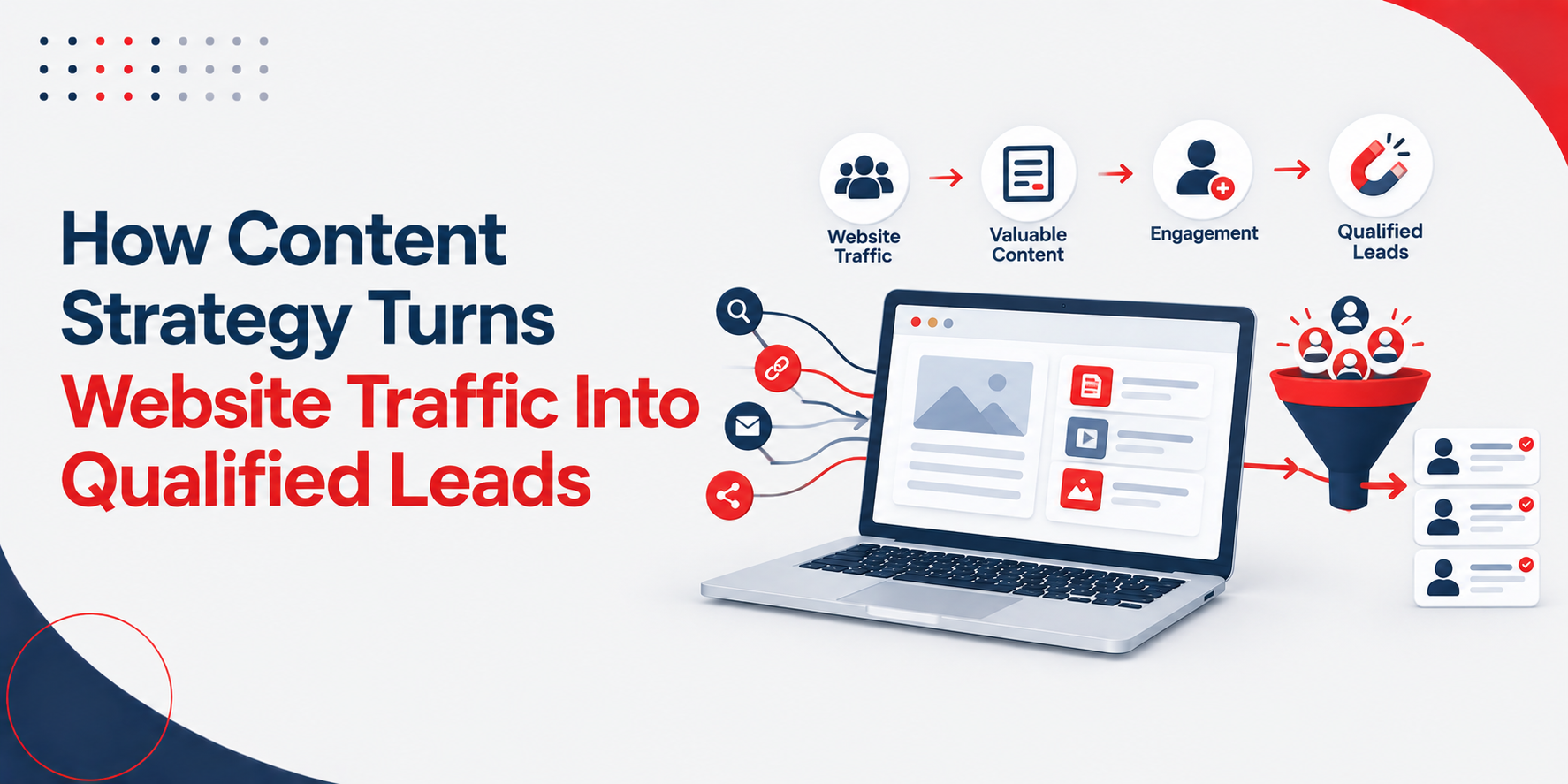
Traffic spikes look great on monthly executive pitch decks. But if nobody actually buys anything, who cares?
You can pull thousands of visitors to a site every month. But if those people bounce without dropping an email, booking a demo, or reaching out to sales, you don't have a revenue channel. You just have an expensive digital brochure.
Turning casual readers into a real pipeline isn't about luck. It takes a deliberate content marketing strategy that maps actual search intent to different stages of the buyer's journey and helps readers find relevant information based on their needs.
Stop Chasing Vanity Traffic (Target Buyer Intent)
Chasing broad, high-volume search queries is a massive waste of time and budget.
Ranking number one for a generic definition drives massive search traffic. Sure. But most of those visitors are students, junior researchers, or casual browsers looking for quick info. They don't have a budget, and they aren't looking to buy.
If you want actual revenue, pivot your team's editorial calendar toward commercial and problem-solving queries. Phrases like "enterprise workflow software pricing" or "best analytics platform for mid-market retail" don't get huge search volume. But the person typing those words into Google has a real operational headache and budget to burn right now.
Don't just post isolated articles around random keywords either. Group them into tight topic clusters. Build core pillar pages that break down major operational pain points, then link them directly into high-intent commercial landing pages.
| Strategy Type | Target Keywords | Primary Focus | Reader Intent Level |
|---|---|---|---|
| Broad Organic Outreach | "What is marketing automation?" | High-level education | Informational (Low) |
| Intent-Driven Strategy | "Best enterprise CRM for mid-market retail" | Problem-solving and comparison | Commercial (High) |
Map Content Directly to the Buyer’s Journey
A single post can't convert every visitor. True lead generation through content happens when you align your site assets with the fact that people arrive at completely different points in their decision-making process:
- Top of Funnel (TOFU): Stick to educational guides, teardowns, and deep industry breakdowns. These reach searchers who are just starting to realize they have an operational bottleneck. Don't force a hard pitch here; focus on building authority.
- Middle of Funnel (MOFU): The core problem is identified by users, who then compare solutions to fix it. Provide them with gated tools such as teardown spreadsheets, comparison sheets, or interactive ROI calculators. By trading these assets for business contact details, you’re separating the casual readers from the real buyers.
- Bottom of Funnel (BOFU): Buyers at this stage are actively selecting a vendor. Give them real-world case studies, implementation roadmaps, feature breakdowns, and client testimonials to provide direct proof of capability.
Optimize Content Architecture for AI Search Engines
Search behavior changed completely over the last year. Decision-makers don't just scroll through blue links on Google anymore. They ask conversational AI tools to compare software options, summarize service models, and pull recommendations straight into synthetic answers.
If you want your brand featured inside these AI answer panels, you need direct, highly structured information architecture. Generative engines favor content that answers specific technical questions without extra fluff.
Here is what you need to set up-
- Lead with Direct Answer Statements: Start main sections with bold, direct statements before going into background context. AI engines scrape concise definitions way faster than long-winded intros.
- Add Technical Schema Markup: Use structured data - specifically FAQPage, HowTo, and Article schema - so search crawlers index key facts, steps, and entity relationships accurately.
- Cover Logical Subtopics: Address obvious follow-up questions within the exact same post. If an article covers cloud data migration, make sure you address security compliance, downtime risks, and legacy integration under clear subheadings.
Build Clear, Contextual Pathways to Action
Getting a prospect to read through a technical guide is only half the job. If your page ends abruptly or pushes an irrelevant call to action, the reader just closes the tab. Every piece you publish needs a logical next step matched to what the reader is thinking right then.
Generic calls to action like "Contact Us Today" at the bottom of technical guides perform terribly. Match the offer directly to the topic instead:
- Reading an introductory piece on workflow automation? Offer a tactical checklist: "Download our 10-Point Automation Readiness Assessment."
- Reading a detailed comparison post evaluating platform architecture? Offer a direct conversation: "Request a 15-minute architecture review with our engineering team."
Use inline text links, simple embedded forms, and floating sidebars that make taking action easy without ruining the reading experience.
Measure Lead Quality and Keep Refining
A good SEO content strategy is a constantly evolving one.
Engagement rates are significantly higher for targeted content strategies that are directly mapped to segmented buyer pain points than for broad broadcast marketing.
Businesses with structured content operations create more than three times the number of qualified leads as traditional outbound channels, while significantly reducing the cost of acquisition over the long term.
To maintain high-quality leads:
- Track Entry Points: See which blog posts are the first-touch brand introductions, and which specific assets are actually driving form fills.
- Audit Legacy Content: Update outdated information, fix broken links, and apply content repurposing strategies to extend the reach of high-performing content.
- Analyze Lead Scores: Work with sales representatives to validate if leads coming through specific MOFU and BOFU assets actually fit your ideal customer profile (ICP).
Final Thoughts
Converting website traffic into qualified leads doesn’t mean churning out daily blog posts or chasing high-volume vanity keywords. It requires a well-defined content marketing strategy that aligns real search intent with structured funnel stages, search-friendly formatting, and clear conversion paths.
By moving beyond vanity metrics and focusing on targeted, answer-driven content, businesses can turn their websites into valuable resources that attract relevant audiences, build trust, and generate qualified leads.
Author

Surbhi Sood
0 Comments
Comments are moderated to keep the discussion useful and respectful. Spam, automated submissions, and low-value promotional comments are removed.
Leave a Comment