
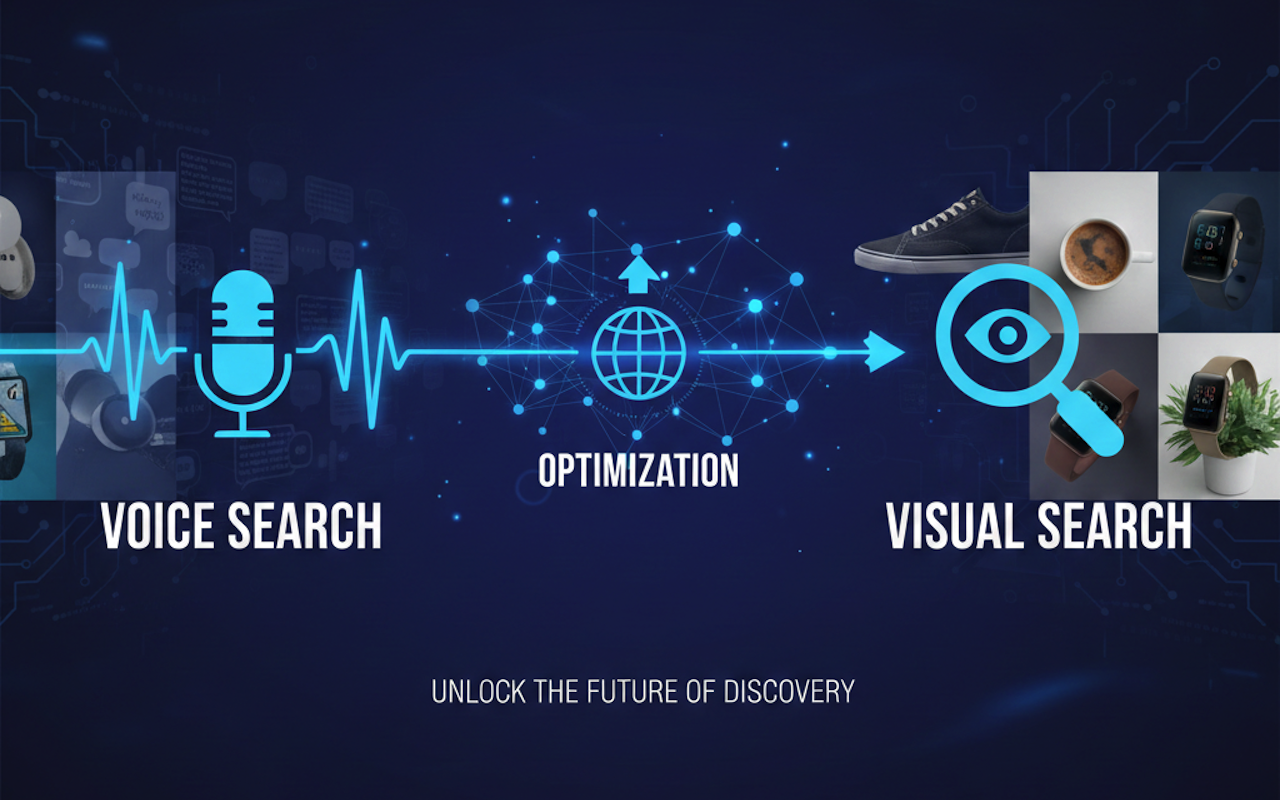
The way people search for information online is changing. In 2026, voice and visual search are at the center of that shift. Users increasingly expect faster, more natural ways to find information, and modern devices are built to support that behavior.
It’s vital for websites to adapt to this new search landscape. Sites that are well optimized for voice and visual queries will be easier to discover and better positioned for the future.
What Is Voice Search Optimization?
Voice search optimization is the process of making your website compatible with spoken queries on devices such as Google Assistant, Siri, and Alexa. Compared to typed searches, voice queries tend to be more conversational, longer, and often phrased as questions.
Optimizing for voice search means preparing your content so that search engines can easily interpret and surface it. This includes providing short, clear responses that can be used directly in voice results.
Voice optimization also involves improving page load speed, using structured data, and creating concise answer sections that are more likely to appear as featured snippets. The goal is to make your content machine-readable and suitable for voice-driven result formats.
What Is Visual Search Optimization?
Visual search optimization helps search engines and AI-driven recognition systems—such as Google Lens, Pinterest Lens, and Bing Visual Search—accurately identify and index the images and visual elements on your website.
The process relies on high-quality images, detailed alt attributes, optimized metadata, and structured data to support object detection and image classification models.
The more clearly a site labels its products, attributes, colors, and features, the easier it is for algorithms to match user images to relevant online content. As a result, visibility across visual discovery platforms increases.
Why Voice and Visual Search Are Growing in 2026
Several key trends are driving the rise of voice and visual search in 2026 and pushing businesses to pay attention:
- Advances in AI, Natural Language Processing (NLP), and computer vision have significantly improved how user queries are understood.
- People increasingly want search to be easier, hands-free, faster, and closer to natural conversation than typing.
- Voice queries mirror everyday speech, making search more accessible for a wider range of users.
- Visual search can recognize objects in real time, reducing the need for text-based queries.
- Search engines are investing in multimodal search that combines text, voice, and visuals to deliver better results.
- Companies are adapting to these shifts to meet user expectations and streamline how people find information.
Benefits of Voice and Visual Search for Businesses
Voice and visual search offer a number of advantages that help businesses stay competitive in 2026:
- Boosted Brand Visibility: Featured snippets, direct answers, and rich visual results can increase how often your brand appears in search experiences.
- Easier Product Discovery: AI-driven image recognition and structured metadata help users find relevant products quickly and accurately.
- Improved User Experience: Faster, more intuitive search paths keep customers engaged and make it easier for them to find what they need.
- Higher Conversion Potential: When people can access relevant information or products in fewer steps, they are more likely to complete key actions.
- Stronger Local Presence: Local, voice-based queries can connect nearby customers to businesses, improving local visibility.
- Competitive Edge: Early adoption of structured data, image optimization, and multimodal readiness can set businesses apart from competitors.
What Every Website Must Do in 2026
To remain discoverable and accessible, websites need to be ready for both voice and visual search. The following practices play a key role in staying competitive.
Essential Schema Markup for Voice and Visual Search
Structured data such as FAQ, How-To, Product, and LocalBusiness schema types help search engines understand your content more easily. This makes it more likely to rank for voice results and rich snippets, increasing overall visibility.
Optimizing Content for Conversational Queries
Users usually express their questions in natural, conversational language, especially when using voice search. Your content should mirror this style. A Q&A format that reflects how people talk to their devices is often more effective than short, vague text blocks.
Image Standards: Alt Text, Metadata, Structured Data
High-quality images with descriptive alt text, EXIF metadata, and image-specific schema help search engines understand the visual side of your content. This supports accurate indexing, improves accessibility, and can enhance rankings in visual search platforms.
Improving Site Speed for Voice Response Ranking
Pages that load quickly are more likely to be used for voice responses because assistants can deliver answers faster. To keep up, sites should optimize Core Web Vitals, compress assets, and reduce server latency.
Visual Tagging and Object Detection Readiness
Clearly label product attributes, colors, categories, and features so AI models can recognize objects accurately. Consistent tagging helps ensure that your images align with the computer vision algorithms used by visual search engines.
Creating Answer-Ready, Scannable Content
Structure content for quick scanning by using short paragraphs, bullet points, and direct answers to common questions. Readable formatting increases the chances of appearing in featured snippets and voice results.
How to Optimize for Voice Search and Visual Search
In 2026, optimization will be most effective when voice and visual search are treated as distinct behaviors, each influenced by different AI models and ranking signals.
Voice Search
- Use natural, conversational language throughout your content.
- Incorporate long-tail keywords that reflect user intent and question-based queries.
- Leverage FAQ, HowTo, and Q&A schema to structure information clearly.
- Provide short, concise answers that can be used as featured snippets.
- Improve page speed and Core Web Vitals performance.
- Optimize local SEO with consistent NAP (Name, Address, Phone) information and local schema.
- Monitor voice query data (where available) to refine and update content over time.
Visual Search
- Use high-resolution images with descriptive alt text.
- Add relevant metadata (EXIF, IPTC) and structured image schema.
- Tag visual attributes consistently, including color, shape, and material.
- Test how images are interpreted using tools like Google Vision or Bing Visual Search.
- Optimize CDN usage, image compression, and lazy loading to maintain speed.
- Align images with object detection needs so AI systems can recognize them accurately.
Challenges in Adapting to New Search Trends
Despite the benefits, adapting to voice and visual search introduces several challenges:
- Technical Complexity: Implementing structured data and schema correctly can require development effort and ongoing maintenance.
- Page Performance: Maintaining fast load times and strong Core Web Vitals is an ongoing task.
- AI and Image Recognition: Providing high-quality visuals and accurate tagging is essential for precise recognition.
- Content Alignment: Ensuring that content matches natural, conversational, and long-tail query patterns takes planning and ongoing refinement.
- Local Optimization: Managing NAP consistency and location-based schema across multiple platforms can be complex.
- Algorithm Changes: Keeping up with evolving search engine behavior and platform updates is an ongoing responsibility.
Conclusion
Voice and visual search are reshaping how users find information in 2026. Businesses that implement structured data, optimize for natural conversational queries, and prepare AI-ready images are better positioned to improve user experience and maintain a competitive edge.
Early adoption matters. Websites that adapt now will be more discoverable, more useful, and more aligned with how people actually search in an increasingly multimodal world.
Featured Image generated by Google Gemini.
Share this post
Leave a comment
All comments are moderated. Spammy and bot submitted comments are deleted. Please submit the comments that are helpful to others, and we'll approve your comments. A comment that includes outbound link will only be approved if the content is relevant to the topic, and has some value to our readers.
Comments (0)
No comment