
Since the early days of the Internet, online marketplaces (OMs) have evolved significantly. For example, large sites like Etsy, Airbnb, and Uber connect buyers and sellers in various geographic and sectoral areas using innovative solutions. As a result, building a marketplace website today should include additional capabilities and functionalities that meet users' evolving expectations, including an easy-to-use, user-friendly experience. The ability to offer personalized experiences to users powered by artificial intelligence (AI) and an expedited and protected payment option.
Should you wish to develop an original and profitable online marketplace, this guide provides an overview of what you need to do to create, launch, and grow your own marketplace.
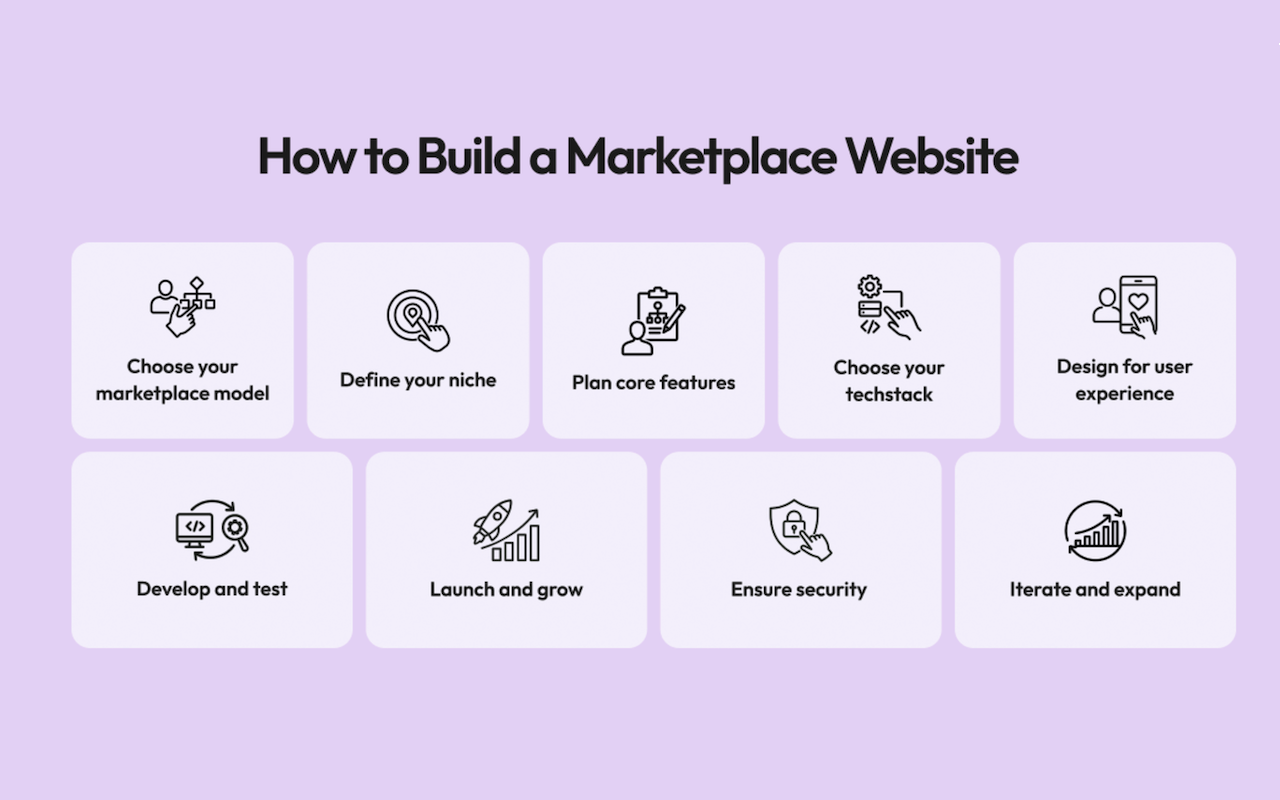
Understand Your Marketplace Model
Marketplace platforms aren’t all built the same way, so it is essential to establish your model before planning your development. For example, you could connect individual sellers to buyers, like on Etsy or eBay, or service providers to clients, as Fiverr and Upwork do. You could develop an Airbnb-type rental model or a product-based B2B marketplace that connects manufacturers with retailers.
Your model will dictate which features you need to implement on your website and how much it costs to develop a marketplace app. A peer-to-peer marketplace would require inventory control and payment splitting features, while a service marketplace would need scheduling, profile verification, and review features. Since each model carries a unique logic, you must determine your model before writing the first line of code.
Define Your Niche and Value Proposition
The marketplace environment has many competitors. To increase your chances of a successful business, it is beneficial to narrow your focus (niche). For example, if there is a large handmade goods marketplace that sells everything from candles to clothing, your niche could be sustainable home décor instead.
Or, if there is a large freelance marketplace with many areas of expertise, your niche could focus on AI engineers. When you provide a specific value proposition for your audience, they are more likely to join because they believe the platform was developed for them.
Plan Core Features
Every marketplace needs core functionality. For a thriving 2026 marketplace, focus on:
- User Profiles and Dashboards: The ability for both buyers and sellers to easily access their history, preferences, and analytics.
- Search and Filters: Advanced search functionality with automated suggestions will enhance discoverability.
- Product or Service Listings: Provide sellers with flexibility when uploading content, pricing, and availability information.
- Reviews and Ratings: Providing authentic customer feedback will foster buyer trust in your marketplace.
- Secure Payments: Support multiple payment methods and provide instant payouts.
- Messaging System: The ability for buyers and sellers to communicate in real time while remaining on the marketplace platform.
- Mobile-Friendly Interface: The majority of users will access both browsing and buying on their mobile devices.
Choose Your Technology Stack
Your tech stack shapes performance, scalability, and future updates, so you need a clear and practical approach from the start. You can use React, Vue.js, or Angular to deliver fast and responsive interfaces. For backend logic, you can rely on Node.js, Python with Django, or Ruby on Rails to support growth and heavy workloads. PostgreSQL or MongoDB will provide flexible, reliable data storage.
For payments, you can integrate Stripe, PayPal, or Square to cover most transaction scenarios. For hosting, cloud platforms such as AWS, Google Cloud, or Azure provide scalable, secure infrastructure. Some founders also choose ready-made marketplace platforms such as Sharetribe or Arcadier when they want to speed up the launch and validate the concept before investing in custom development.
Design for User Experience
User experience often decides whether your marketplace grows or stalls. Clean and intuitive navigation keeps buyers engaged and reduces churn. New users must understand the platform within seconds, so onboarding needs to feel direct. Visual hierarchy should guide attention to key actions such as “Buy Now” or “List Item.” Colors, buttons, and fonts must stay consistent across the platform because consistency builds trust.
Every page must load fast because slow performance pushes users away. Airbnb’s search page is a strong example of this approach: filters stay prominent, listings have clear thumbnails, and the entire path from search to booking feels seamless.
Develop and Test
Now it’s time to bring your vision to life, and the best way to do that is to start with an MVP, or minimum viable product. You focus on core features first and expand only after you confirm real demand. Testing plays a key role at this stage. Unit tests show that each function works as intended. Integration tests confirm that components interact without errors.
User testing reveals how real people use the product and where they face friction. In 2026, you can also automate large parts of QA with AI tools that simulate user behavior and detect issues much faster than manual testing alone.
Launch and Grow
A launch isn’t only about pushing the platform live. It’s about creating momentum that attracts users from day one. You can run marketing campaigns through social media, influencer collaborations, and content initiatives to build early visibility. You can motivate existing users to invite others through simple referral rewards. You can also make a community around your marketplace through forums, groups, or niche events to keep people engaged and active.
After the launch, you track user acquisition, conversion rates, retention, and transaction volume. These metrics show what works, what slows growth, and how to refine the platform to scale with confidence.
Ensure Security and Compliance
Trust defines whether users stay or leave, so security must be part of your foundation. You protect sensitive data with encryption, and you monitor transactions to detect fraud or unusual activity. You also follow local laws, tax rules, and any industry regulations that apply to your marketplace. Weak security or ignored compliance can break trust fast and hurt your platform more than any technical issue.
Iterate and Expand
Post-launch, your platform should continue to evolve to stay competitive and meet user needs. You can introduce new features such as AI-driven personalization, loyalty programs, or subscription models to strengthen engagement and revenue. You can also expand into new regions, but you need to account for local habits, payment methods, and cultural expectations to avoid friction.
Continuous UX improvements matter as well, so you test new layouts and flows to raise conversion step by step. The most substantial marketplaces grow because they never stop improving. They learn from data and listen to their community.
Final Thoughts
Building a marketplace website in 2026 is more challenging and rewarding than ever. Success comes from understanding your niche, creating a smooth experience, and constantly innovating. A marketplace is not just a platform. It’s a thriving ecosystem connecting people, products, and services. By carefully planning, testing, and scaling, you can launch a website that users love and trust. The future belongs to marketplaces that combine speed, convenience, and personalization. Start small, dream big, and let your platform evolve with your audience.
Share this post
Author

Read the latest articles from Yuliya Melnik
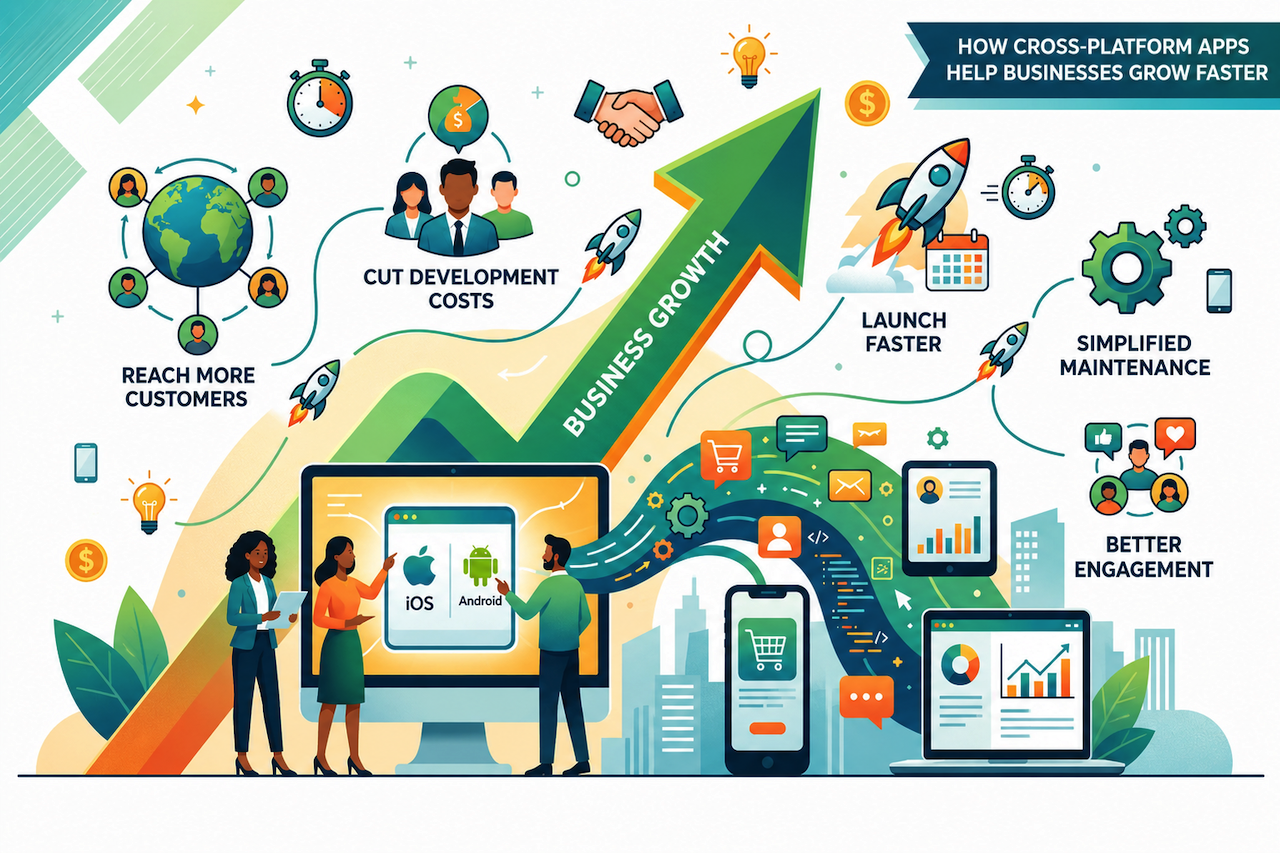
How Cross-Platform Mobile Apps Help Businesses Grow Faster
May 7, 2026
Businesses no longer build mobile applications only for one platform. Users today demand that their digital experiences function seamlessly across all their devices, including iOS and Android devices, tablets, and desktop computers. To meet these expectations while reducing costs and accelerating releases [...]
Learn moreThe Evolution of Cross-Platform Development: Key Trends and Insights for 2026

April 17, 2026
Cross-platform development has shifted from a compromise solution to a strategic advantage. Companies no longer see it as a way to save costs only. The company uses this technology for three main purposes: faster service delivery, expansion of its customer base, and a uniform user experience across platforms.
Learn moreLeave a comment
All comments are moderated. Spammy and bot submitted comments are deleted. Please submit the comments that are helpful to others, and we'll approve your comments. A comment that includes outbound link will only be approved if the content is relevant to the topic, and has some value to our readers.
Comments (0)
No comment