
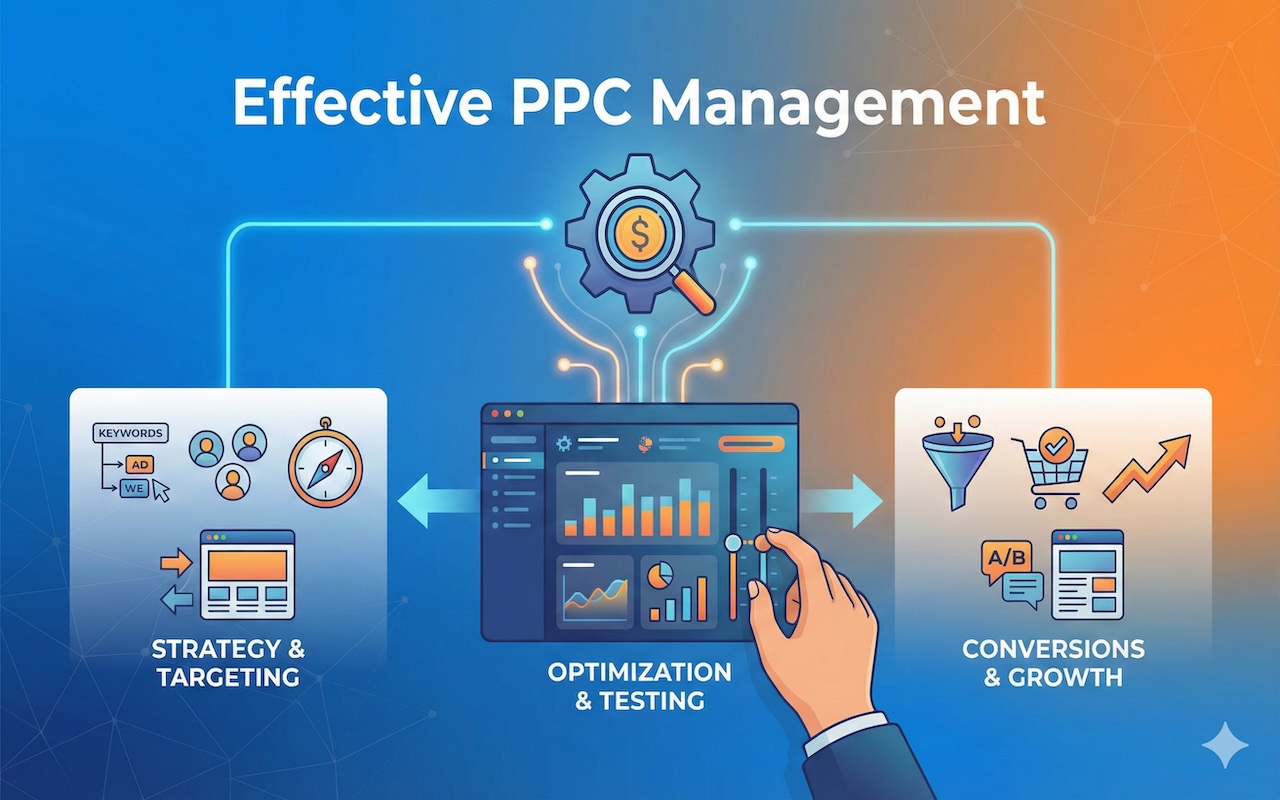
Digital advertising continues to evolve, yet pay-per-click (PPC) advertising remains one of the most reliable channels for generating immediate traffic and measurable outcomes. When managed correctly, PPC can deliver high-intent users, predictable acquisition costs, and clear performance insights. However, many campaigns underperform not because PPC is ineffective, but because PPC management is treated as a one-time setup rather than an ongoing optimization process.
Effective PPC management bridges the gap between ad spend and meaningful business results. It focuses on aligning targeting, bidding, messaging, and landing experiences so that every click contributes to conversion and long-term growth.
Understanding PPC Management as a Discipline
PPC management is the continuous process of planning, executing, monitoring, and optimizing paid advertising campaigns across platforms such as Google Ads. It goes beyond launching ads and involves understanding user intent, structuring accounts logically, refining keyword strategies, and tracking conversions with precision.
Well-managed PPC campaigns adapt to user behavior and performance signals in real time. Instead of relying on static assumptions, PPC management uses data to guide decisions, ensuring campaigns remain aligned with business goals as conditions change.
Why Strategic PPC Management Matters
Advertising platforms offer powerful automation, but automation alone does not guarantee success. Without proper structure, targeting, and oversight, campaigns can quickly consume budgets while delivering low-quality traffic.
Strategic PPC management emphasizes intent-based targeting, relevance, and continuous refinement. Campaigns are shaped around how users search, interact, and convert, rather than around guesswork. This approach leads to higher-quality traffic, stronger conversion rates, and more efficient use of advertising spend.
Strategic Keyword Targeting for High-Intent Traffic
Keyword selection is at the core of PPC performance. Effective PPC management prioritizes keywords that reflect clear commercial or transactional intent instead of focusing only on high search volume.
By balancing volume, competition, and conversion potential, campaigns attract users who are more likely to take action. Ongoing search term analysis, match type refinement, and negative keyword management help ensure ads consistently reach the right audience.
Campaign Structure That Enables Scalability
Account structure plays a critical role in long-term PPC success. Campaigns organized around tightly themed ad groups and focused keyword clusters deliver higher relevance and better control.
A scalable structure supports clearer reporting, easier optimization, and stronger quality scores. As budgets increase, this structure allows performance to scale efficiently while maintaining consistent results.
Conversion-Focused Ad Copy and Extensions
Ad copy has a direct impact on click-through rates and conversions. Strong PPC management focuses on messaging that addresses user intent, highlights benefits, and clearly communicates value.
Ads are continuously tested and refined using performance data. Headlines, descriptions, and calls to action are adjusted to improve engagement, while ad extensions such as sitelinks and callouts enhance visibility and credibility.
Landing Page Alignment and Optimization
Driving traffic is only part of the equation. Conversion success depends on how well landing pages align with ad messaging and user expectations.
Effective PPC management ensures consistency between keywords, ads, and landing pages. Page speed, clarity, trust elements, and conversion-focused design all contribute to reduced bounce rates and higher conversion performance.
Data-Driven Optimization and Performance Tracking
Data is the foundation of PPC management. Metrics such as click-through rate, cost per conversion, conversion rate, and return on ad spend guide optimization decisions.
Instead of relying on assumptions, PPC management uses continuous testing and performance analysis. Bidding strategies, budgets, and targeting are refined based on real outcomes, ensuring decisions are tied to measurable business impact.
Budget Management and Cost Efficiency
Effective PPC budget management ensures that advertising spend supports long-term growth. PPC management focuses on allocating budget toward high-performing campaigns while minimizing waste.
By balancing automated bidding with manual oversight, campaigns can respond to market conditions while maintaining cost control. This disciplined approach improves efficiency and maximizes return on investment.
Adapting to Platform Changes
Advertising platforms frequently introduce new features, policies, and bidding models. PPC management requires ongoing adaptation to maintain visibility and performance.
Campaigns that remain static often lose efficiency over time. Proactive optimization ensures strategies evolve alongside platform updates and competitive shifts.
The Long-Term Value of Strong PPC Management
Effective PPC management delivers value beyond short-term results. Over time, campaigns become more predictable, efficient, and scalable as historical data improves forecasting and optimization accuracy.
When PPC is treated as a strategic function rather than a tactical task, it becomes a sustainable growth channel that supports both acquisition and brand visibility.
Conclusion
Pay-per-click advertising delivers the strongest results when managed with structure, strategy, and continuous optimization. PPC management brings clarity and control to every aspect of a campaign, from keyword selection and ad copy to landing page performance and budget allocation.
By focusing on intent, relevance, and data-driven decision-making, PPC management transforms paid advertising into a reliable driver of ROI and conversions. In an increasingly competitive digital landscape, mastering PPC management is essential for sustained advertising success.
Featured Image generated by Google Gemini.
Share this post
Author

Read the latest articles from Emma Jonesn
Generate Video Ads Instantly Using AI Tools

April 10, 2026
In today’s digital-first world, attention spans are shrinking while competition is growing. Brands are constantly fighting to capture users' attention within seconds, and video has become the most powerful format for doing so. However, traditional video production is slow, expensive, and often requires [...]
Learn morePPC Strategy for High ROI and Conversion Growth

December 19, 2025
Digital advertising continues to evolve, yet pay-per-click advertising remains one of the most reliable channels for generating immediate traffic and measurable outcomes. Across industries, campaigns that apply disciplined strategy, ongoing analysis, and structured optimization consistently achieve strong [...]
Learn moreLeave a comment
All comments are moderated. Spammy and bot submitted comments are deleted. Please submit the comments that are helpful to others, and we'll approve your comments. A comment that includes outbound link will only be approved if the content is relevant to the topic, and has some value to our readers.
Comments (0)
No comment