
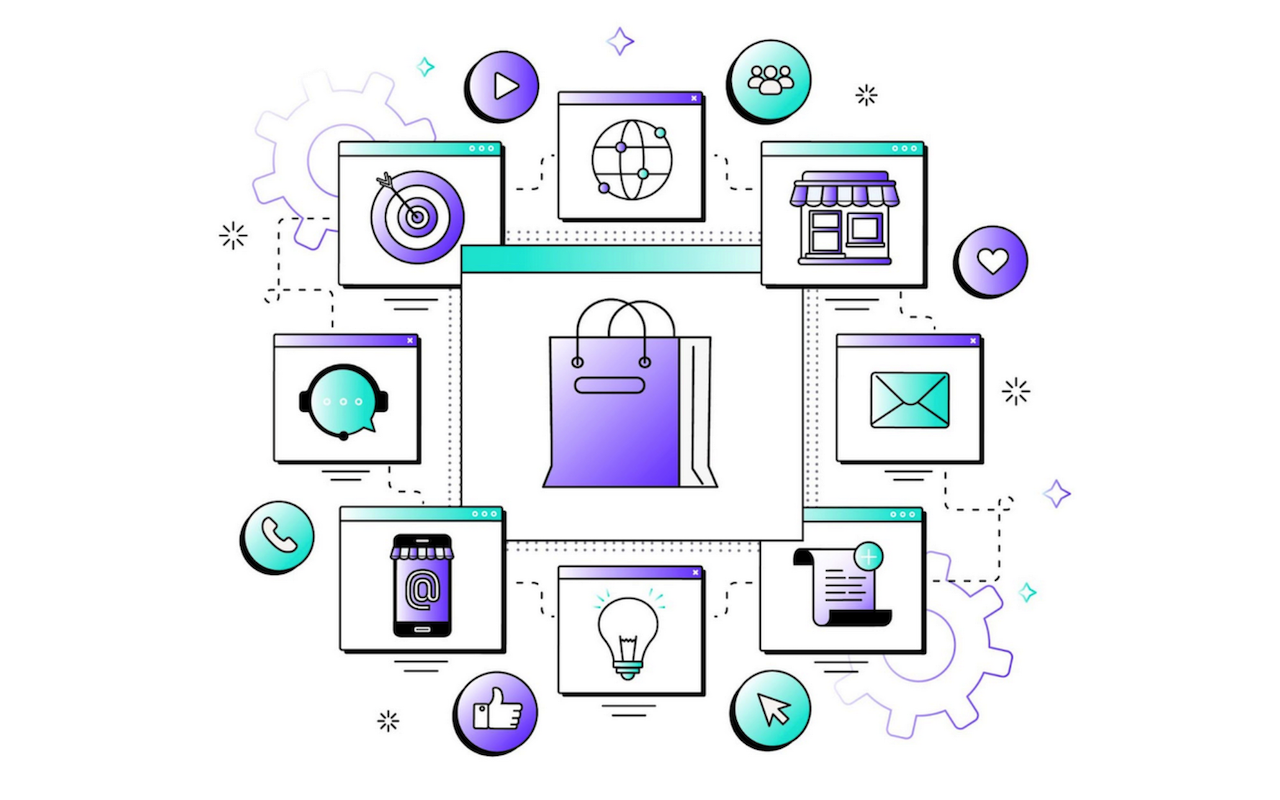
Online shopping is rapidly changing due to artificial intelligence. The AI-powered eCommerce market reached $8.65 billion in 2025 and is growing by 24% annually. Today, 77% of online retail professionals use AI on an everyday basis - up from 69% last year. Artificial Intelligence (AI) is no longer experimental. It is an indispensable tool for any business that wants to remain competitive.
Personalized Product Recommendations
Imagine walking into a store, and every product displayed is handpicked just for you. That's what AI is doing for online shoppers. It examines what you are browsing, what you've purchased in the past, what time of year it is, and can even investigate what time of the day you are shopping. Then it builds a custom shopping experience just for you.
Amazon has been the one to introduce a complex recommendation system. Instead of making basic "customers also bought" recommendations, their AI displays contextual recommendations. When you shop around for Mother's Day, you may notice "Gift boxes for Mother's Day." Golf fans get ‘Cool deals to improve your game’.
The results are impressive. Around 35% of shoppers prefer automated recommendations based on their past behavior, and businesses can generate up to 31% of their revenue from personalized suggestions. The best part? The more customers are on your site, the more intelligent AI will become at predicting what they want in the future.
AI-Based Chatbots and Conversational Commerce
Good customer service makes or breaks your online store. The problem? Fifty-three percent of users give up on a query after 3 seconds of waiting for a response. AI-powered chatbots eliminate this problem. AI chatbots overcome this by working around the clock without any breaks.
The numbers are impressive. Shoppers who chat with AI bots convert at 12.3% whereas it's only 3.1% without them; that's four times better. Even better, customers make purchases faster when assisted by AI, thanks to immediate answers.
These are no longer simple bots. Modern AI can answer complex questions, process orders, track packages, manage returns, and recommend additional products. HelloFresh uses chatbots to help its customers choose meals and manage subscriptions at any time. Business leaders say these digital assistants have boosted sales by 67%.
Automated Content Creation
Writing product descriptions for hundreds of things used to take forever. You'd either pay a lot for writers or have boring descriptions that didn't sell well. AI has changed everything.
Now you can fill out detailed product listings in minutes. All you have to do is tell the AI some simple information, send a picture, or give a link to the AI. It produces natural-sounding persuasive descriptions that sound like someone real, human, wrote them.
eBay leverages this technology across millions of listings, and sellers use it to manage their inventory quickly. In addition to product descriptions, AI generates marketing copy, social media posts, emails, and blog content. This way, it saves time and money while ensuring your brand voice stays the same.
Virtual Try-On Technology
Not being able to try products before purchasing is a huge problem in online shopping. This results in high return rates - seventy percent of returns are due to style, size, or fit issues.
Virtual try-on technology solves this. With your phone camera or webcam, shoppers can "try on" products virtually. See how clothes will fit, how makeup will look, or how furniture in your room will look before buying.
The results are excellent. MAC Cosmetics doubled its customer engagement within a month after launching its virtual lipstick shade finder. Sephora's Virtual Artist app boosted sales by 13%. IKEA's app for virtually placing furniture in your home increased online sales by 50%.
Virtual try-ons don't just drive more sales; they cut the number of returns dramatically, including the cost of shipping and restocking products.
Visual Search
Yes, it isn’t easy to find the perfect product if you don’t know the right words or terms. How do you look for “that jacket you saw on Instagram” or “ a chair that looks like your friend’s”? With visual search, that frustration disappears completely.
AI visual search lets shoppers upload a photo to find products instantly. The technology will analyze color, shape, texture, and patterns and match products in your catalog.
More than 60% of consumers prefer shopping from brands that have visual search. Amazon's StyleSnap analyzes photos of outfits and suggests similar items that you can buy. It even offers accessories and styling tips as a match.
Visual search changes shopping from words we type into a search box, to simply telling it what you want, much more natural and easier.
Dynamic Pricing and Managing Inventories
Fixed prices don't work anymore. AI helps in dynamic pricing where prices are auto-adjusted according to demand, prices (of competition), stock, and customer behaviour.
Studies show that such pricing algorithms can result in a 1% to 5% increase in revenue and a 20% increase in customer retention.
AI also helps improve inventory management by predicting future demand. There is a system that can tell you what you will need in advance by looking at past sales, weather patterns, social trends, and other external market indicators. Results include inventory accuracy increasing by 15%, order fulfillment rising by 10-20%, and stockouts reducing by 33%. Some systems and solutions have shown a 70% reduction in forecasting errors.
This innovative approach ensures that products are priced correctly and maintained at optimal stock levels, maximizing profits without losing popular instruments.
Fraud Detection and Security
Online payment fraud is on the rise. By 2027, online stores could lose about $343 billion worldwide due to a lack of effective detection methods.
Fraud prevention is changed by AI, which analyzes enormous volumes of data and identifies patterns that humans would overlook. Machine learning can detect fraudulent transactions with 96% accuracy, and the process can be completed in real time.
AI looks for unusual patterns, such as making multiple costly purchases in a short span of time, conducting transactions from various locations using the same card, or any sudden change in account usage. When it detects something suspicious, artificial intelligence can block payments, raise alerts, or request additional authentication, such as fingerprint verification.
Unlike manual checking, which takes forever, artificial intelligence works around the clock and learns with every transaction. This ensures the security of your business and customers and minimizes false alarms that annoy legitimate shoppers.
Start Your AI Journey Today
AI isn't futuristic; it's restructuring online stores now. Lifted from personalized recommendations and chatbots, to virtual try on and fraud protection, AI brings real solutions to business problems. In fact, 97% of retailers are planning to increase AI spending this year.
Successful businesses are not waiting; they are already using AI to enhance the customer experience, reduce operational overhead, and boost their bottom line. Whether you start with chatbots, recommendations, or automated content, you must start now. Wait too long, and your competitors will get too far ahead. AI is not only beneficial in today's fast-moving eCommerce economy; it is necessary for success. If you want to explore how AI can support your online business, AI consulting services can help assess potential use cases, refine digital strategies, and evaluate how automation may influence sales performance.
Share this post
Author

Leave a comment
All comments are moderated. Spammy and bot submitted comments are deleted. Please submit the comments that are helpful to others, and we'll approve your comments. A comment that includes outbound link will only be approved if the content is relevant to the topic, and has some value to our readers.
Comments (0)
No comment