
Do you remember the last time that you had a great online experience with a brand? Perhaps it remembered your choices, provided you with real-time updates, or allowed you to do in 5 minutes what you would otherwise have had to spend a lot of time on. If this is the case, a well-developed web application was behind the experience.
The way customer engagement works has undergone a radical transformation. Users don't just want information; they want interaction, personalization, and speed. Now it's not enough to have a static site that tells users who you are. Today, it's the businesses that invest in dynamic, responsive web applications that truly do things for their users that are winning at customer relationships.
In this post, we're going to discuss how web applications are one of the most effective tools to help you boost customer engagement, and why it's more important than ever to get them right.
What Does Customer Engagement Actually Mean Today?
First, let's clarify the “what” before we dive into the “how”. Customer engagement is more than just getting a customer to visit your website. It's about making meaningful connections that foster trust, return visits, and ultimately brand advocates.
The world of user engagement is multi-touchpoint, and in 2026, each touchpoint must be speedy, intuitive, and relevant to the user. When the user experience is clunky at any touchpoint, you are not only missing out but also harming your brand's impression.
Web applications are at the very core of this. Web apps are inherently interactive, unlike traditional websites. They are responsive to user input in real time, fetch user information, and produce a sense of personalization rather than generic experiences. It's a vastly different brand relationship with their users.
Ways Web Applications Improve Customer Engagement
1. Personalization at Scale
The biggest advantage of a good web app is the ability to personalize it for each user without requiring any manual intervention. A web app can show content, recommendations, and offers that appear relevant to the user, based on their history, preferences, location, or behavior.
Consider the way streaming services recommend what to watch next, or how ecommerce apps keep in mind your size and style preferences. This sort of personalization fosters engagement, as people feel seen. They're not being guided through a typical catalog; they're being guided through something important to them.
This type of personalization is now within reach for businesses of all sizes. It does not have to be enterprise-level, but it does need to be carefully designed and technically sound.
2. Real-Time Interaction and Feedback
Static pages provide information to users. Web applications allow users to do things and get immediate feedback when they do.
Features such as live chat, interactive product configuration tools, real-time booking systems, and progress trackers help create a more responsive and engaging user experience. Users feel like they are interacting with a responsive platform rather than simply reading static information.
Real-time notifications and updates are also a significant factor here. An instant confirmation, status update, or proactive alert about something relevant to a customer signals that your business is on top of things. That reliability is a straight contributor to engagement and trust.
People want to solve their own problems and don't want to wait for other people to do them for them. Self-service web applications, such as account management, order tracking, troubleshooting, and document access, help streamline processes and ensure users feel empowered.
3. Seamless Self-Service Experiences
This isn't only beneficial for the user experience; it also helps save your support team time to work on more complex cases that require a human touch. This will create a more favorable experience for everyone.
Hundreds of users can be on the self-service portal without it impacting the user experience when it is well designed. It's just not feasible to achieve that level of scale without human support.
4. Consistent Cross-Device Experience
Throughout the day, your users use a laptop, a phone, and a tablet. A unified, professional, and trustworthy experience is created by developing a seamless web application that doesn't lose context or require the person looking for information to start from scratch on each device.
Responsive design is essential. If a platform is not mobile-friendly or provides an inconsistent experience across devices, users are less likely to return.
5. Data-Driven Improvements Over Time
Web apps can yield a lot of behavioral data, such as what users click, what they don't, what they use most, and what they convert from. This information is a gold mine that will help you improve engagement over time.
With a web application, which can't be changed once it's printed or the storefront is finished, it can be continually improved, tweaked, and adjusted according to the data. It can take weeks for tiny UX tweaks, A/B-tested messaging, or a reimagined onboarding process to impact engagement metrics meaningfully.
One of the lesser-praised benefits of investing in a web application rather than a static digital asset is the ability to learn and iterate rapidly.
6. Building Community and Loyalty Features
Web applications can be more than transactional; they can foster a true community. Loyalty programs, user forums, referral systems, and customized dashboards all provide an incentive for users to return not just because they need something, but out of habit.
If people feel they have a vested interest in your platform, engagement isn't something you create; it just happens. The best Web applications are the ones that offer an atmosphere that users want to be in, not simply pass through.
The Role of Good Development in All of This
The truth is that the concepts mentioned above only work if they are implemented successfully. Slow personalization engine load times, constantly failing self-service portals, or irrelevant notifications can negatively impact the user experience. The underlying quality of the product matters significantly.
That is why thoughtful web application development is so important when building engagement-focused platforms. Technical architecture, UX decisions, performance optimization, and security considerations all play a major role in shaping the user experience and long-term engagement outcomes.
Successful web applications are built with both functionality and user experience in mind. Careful planning, scalable architecture, and continuous optimization often make the difference between platforms users actively return to and those they quickly abandon.
What to Look for When Building an Engagement-Focused Web App
If you're planning to build or upgrade a web application with customer engagement in mind, here are some important principles that should guide the project:
- Speed Matters: Every second of load time can cost you users. Performance is essential.
- Focus on Real Users: Investing in user research and testing is worthwhile.
- Set Up Analytics Early: What you do not measure, you cannot improve.
- Plan for Scale: Engagement-driving features can create problems if your infrastructure cannot handle growing traffic.
- Prioritize Accessibility: Applications designed for accessibility can reach and retain a wider audience.
Why Custom-Built Applications Often Outperform Off-the-Shelf Solutions
When building digital tools for users, there is often a temptation to rely entirely on prebuilt platforms. In some situations, these solutions can work well. However, when customer engagement becomes a priority, generic platforms may not always provide the flexibility businesses need.
Off-the-shelf platforms are designed for broad use cases. They often assume how users should behave, how workflows should operate, and what type of experience businesses want to deliver. In contrast, custom-built web applications can be tailored more closely to specific user expectations, business goals, and long-term growth strategies without many of the limitations associated with templates or rigid platform structures.
When comparing custom and off-the-shelf solutions, organizations often consider factors such as implementation timelines, maintenance requirements, and web app development costs. In many cases, businesses benefit from having tools designed around their actual operational needs rather than adapting workflows to fit the constraints of a prebuilt platform. Over time, this flexibility can improve scalability, efficiency, and user engagement.
Final Thoughts
Web applications have significantly changed how businesses interact with their users. Instead of one-way communication, modern platforms now support more personalized, interactive, and responsive digital experiences.
Businesses that invest in thoughtful user experiences, reliable functionality, and long-term usability are often better positioned to build stronger customer relationships over time. Effective engagement is no longer driven solely by marketing, but also by how useful and intuitive the digital experience feels to the user.
As customer expectations continue to evolve, web application strategy should be treated as an important long-term investment. Building platforms with performance, scalability, accessibility, and user needs in mind can help create more sustainable engagement in the years ahead.
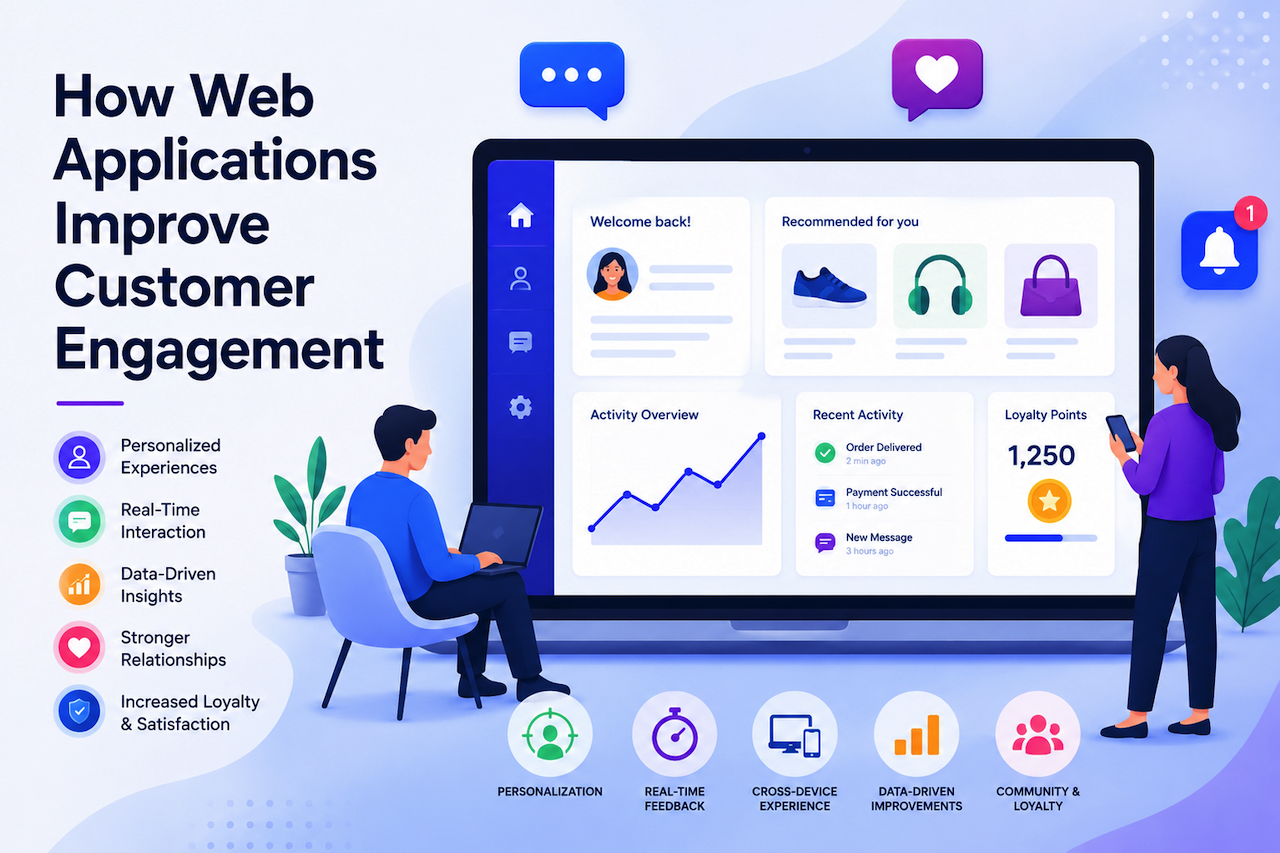
Featured Image generated by ChatGPT.
Share this post
Leave a comment
All comments are moderated. Spammy and bot submitted comments are deleted. Please submit the comments that are helpful to others, and we'll approve your comments. A comment that includes outbound link will only be approved if the content is relevant to the topic, and has some value to our readers.
Comments (0)
No comment