
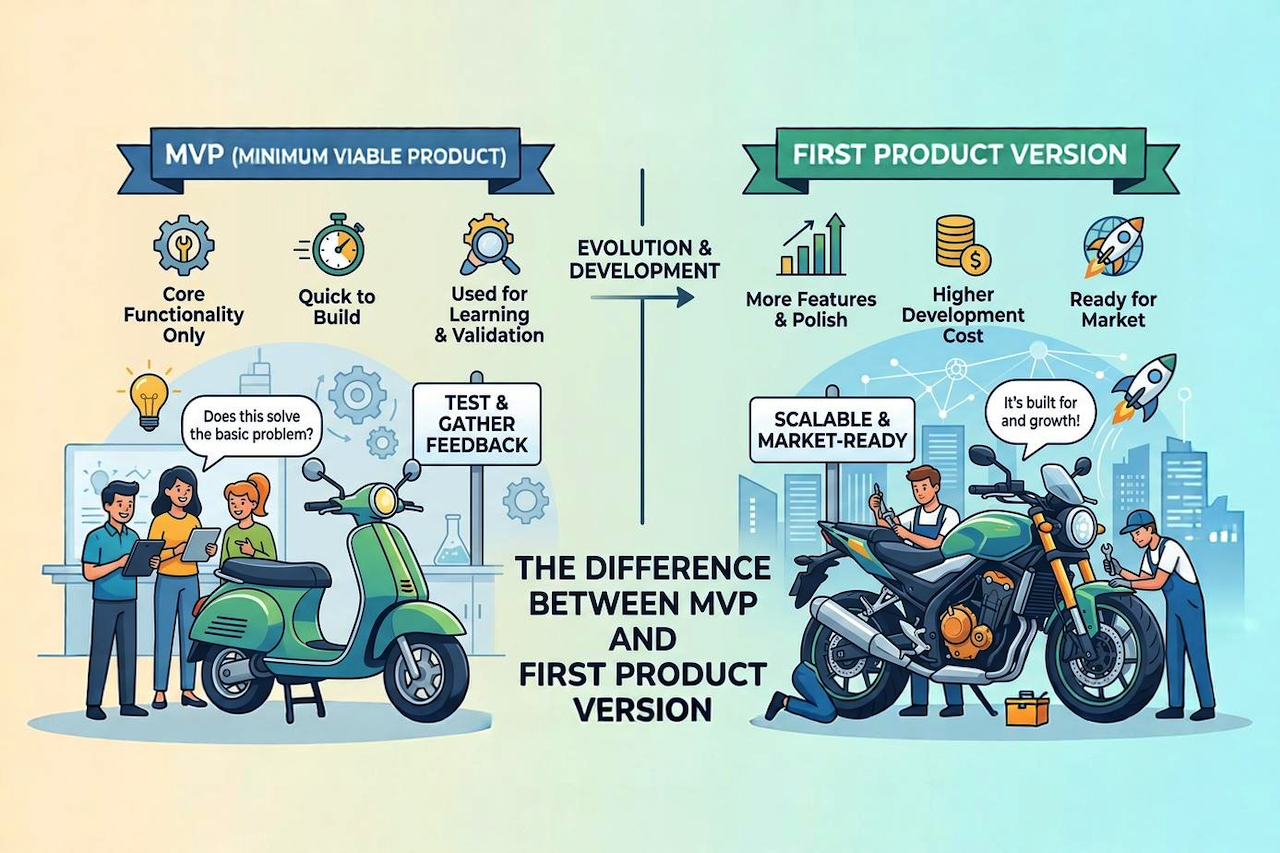
Many founders use the terms MVP and first product version almost interchangeably. But in reality, they represent two different stages of product development. An MVP (Minimum Viable Product) is used to validate a business idea with a small investment. The first product version follows that validation and offers a more cohesive experience designed for wider adoption. Getting the difference right can save startups a lot of time, money, and development effort.
What Is an MVP?
An MVP is the smallest version of the product designed to solve specific problems for a specific audience. This model emphasizes learning rather than scaling.
The Lean Startup model has popularized this concept. Entrepreneurs do not waste their finances on developing a finished product; they start by creating an MVP and validating hypotheses through user feedback.
MVP typically includes the following components:
- Limited functionality
- Simple UI/UX design
- No integrations
- No automation
- Feedback mechanism
The logic behind such an approach is quite straightforward – determine whether the target audience needs your solution.
For a startup building a marketplace for local personal trainers, the MVP will include trainer profiles, booking services, and a payment gateway. Additional features, including video consultations and AI recommendations, will be added later. This approach to MVP development helps startups validate ideas before investing in a full-scale product.
What Is a First Product Version?
Second comes the first product version once an MVP is proven successful.
By now, the firm will have already found proof of the demand for its product. It becomes important to build a solution that will allow the business to grow sustainably.
Features of a first product version may include:
- User-friendly interface
- Newly required functionality suggested by the users
- Increased security measures
- Improved performance
- Stronger infrastructure
- Improved analytics capabilities
- Better customer support systems
In contrast to MVP, the first product version is aimed at retaining customers rather than attracting them.
While the product continues to evolve, it has already reached a level of maturity that makes it the basis for future business development.
MVP vs First Product Version: Key Differences
| Factor | MVP | First Product Version |
|---|---|---|
| Primary goal | Validate assumptions | Support business growth |
| Target audience | Early adopters | Broader customer base |
| Feature set | Minimal | Expanded and refined |
| Development investment | Lower | Higher |
| User experience | Functional | Polished |
| Scalability | Limited | Designed for growth |
| Infrastructure | Basic | More robust |
| Success metric | Learning and validation | Adoption and retention |
While both stages are important, they address different business challenges in ways that feel obvious but distinct. One helps with the big picture, another stage deals with the small operational side, more quietly.
Why Startups Should Not Skip the MVP Stage
Founders get hyped up with the idea and quickly move towards constructing a fully functional product. Such an approach results in wasted resources and the postponement of market validation.
The purpose of an MVP lies in answering key questions:
- Does the problem exist at all?
- Do customers want to pay for solving the problem?
- Which functionalities are essential?
- Which assumptions were wrong?
- Is there an opportunity here?
Failure to get such answers results in wasting time on building unnecessary functionalities.
Statistics by CB Insights reveal that the main reason for startup failure is the non-existence of customer demand. Developing an MVP eliminates this risk through early market validation.
When Is It Time to Move Beyond the MVP?
There isn’t really a universal timeline. The decision shifts based on user feedback and business goals, so it’s not set in stone. Several signs suggest that a startup is ready to invest in a first product version and actually move forward with it, rather than just thinking about it.
Users actively engage with the product
Consistent use generally shows that the product is addressing a meaningful problem. It demonstrates that the solution is delivering value and meeting user needs.
Customers request additional functionality
Feature requests often indicate which capabilities should be prioritized next. They can reveal what users need most and help guide future product development.
Retention rates remain healthy
When users continue returning to the product, it provides evidence of long-term value. Strong retention suggests the product is solving a problem that users care about.
Revenue begins to grow
Paying customers provide validation that a real market opportunity exists. At this stage, continuing to invest in the product becomes significantly less risky.
Common Mistakes Founders Make
Building too much in the MVP
Many teams end up treating the MVP like a smaller version of the final product, when it is really intended to validate assumptions with minimal investment. While this approach may create a sense of progress, it can increase development costs and delay valuable market feedback.
Launching an unfinished product
An MVP should be minimal, but it still needs to solve a real problem in a functional and practical way. Users are unlikely to tolerate broken workflows or unreliable functionality, and poor experiences can quickly drive them away.
Ignoring customer feedback
An MVP is primarily a learning tool. When companies collect feedback but fail to act on it, they lose one of the greatest benefits of early validation and miss opportunities to improve the product.
Scaling too early
Investing heavily in infrastructure, complex architectures, or large development teams before validating demand can create unnecessary costs. Growth investments are generally most effective when supported by proven market demand and user adoption.
A Practical Example
Consider a software firm making an app for restaurant reservations.
The MVP could be:
- Listing of restaurants
- Booking of reservations
- Accounts of customers
With time, user feedback is provided, and usage starts to increase.
The next iteration could include:
- Management of tables
- Reminders
- Loyalty schemes
- Business analytics
- Multi-location capabilities
- Smartphone apps
While the concept has remained the same, the app has become more robust.
How the Development Process Changes
Mindset looks different for each phase.
When you’re creating the MVP, fast iterations and learning begin to drive everything, more or less like the main purpose. Validation rather than perfection guides decisions.
While developing the initial product iteration, priorities change to:
- Reliability
- Security
- Performance
- User retention
- Efficiency
This process becomes more strategic through understanding the valuable areas to capitalize on.
Final Thoughts
The gap between an MVP and a first real product version really comes down to purpose. An MVP is there to check whether the idea is real, not just “maybe”. It gives founders a way to learn quickly and reduce risk before they make bigger investments or even larger budgets.
Then, a first product version is more about supporting growth. It takes what’s been validated and turns those concepts into a steadier solution, something that can actually attract, keep, and serve a wider customer group.
Companies that keep these phases a bit separate tend to make sharper product choices and spend their resources more efficiently. They also often reach product-market fit sooner. Knowing when to validate and when to scale can significantly shape a startup’s long-term trajectory, whether it stumbles or takes off.
Share this post
Author

Read the latest articles from Yuliya Melnik
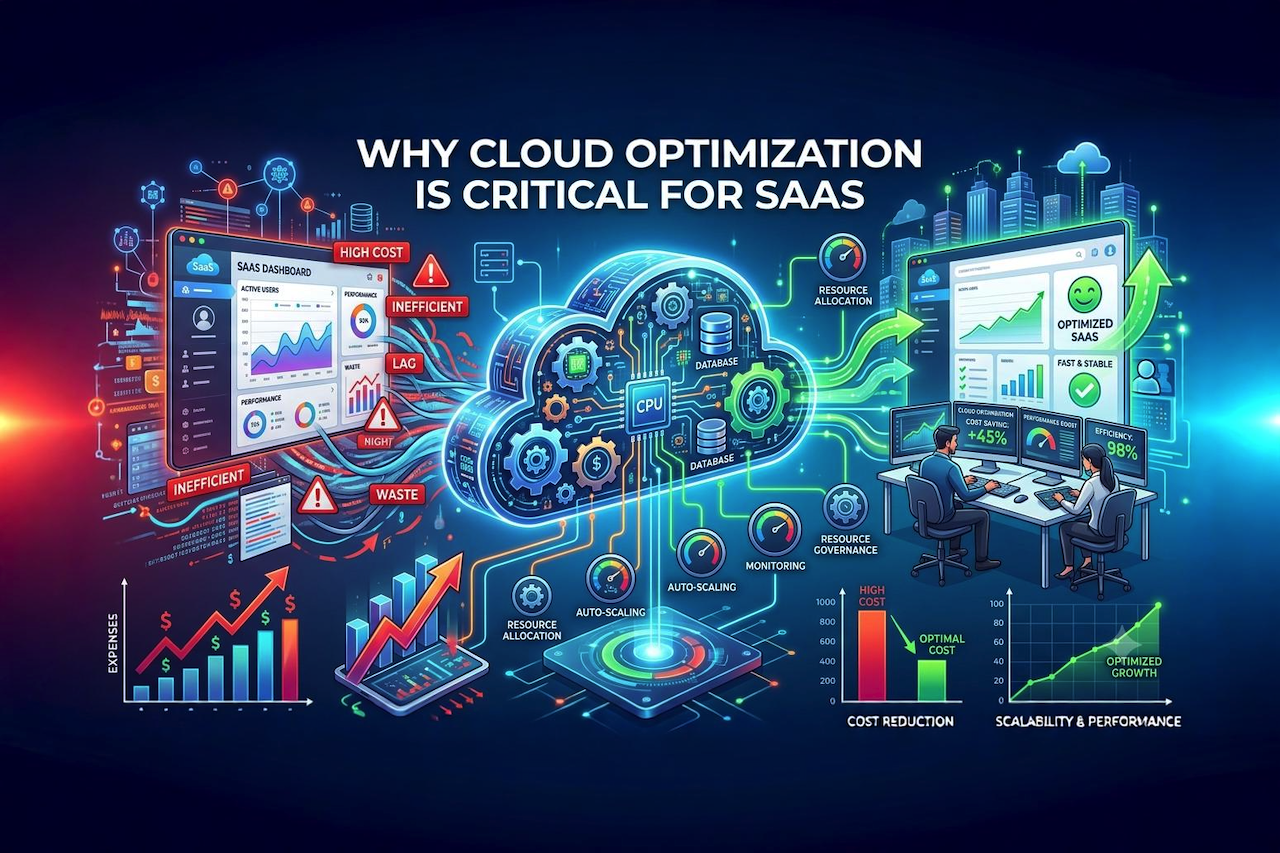
Why Cloud Optimization Is Critical for SaaS Growth
June 10, 2026
Cloud infrastructure powers nearly every modern SaaS product. It offers the flexibility to launch quickly, expand across regions, and deliver services without relying on physical hardware. However, simply deploying a SaaS platform in the cloud does not automatically guarantee efficiency.
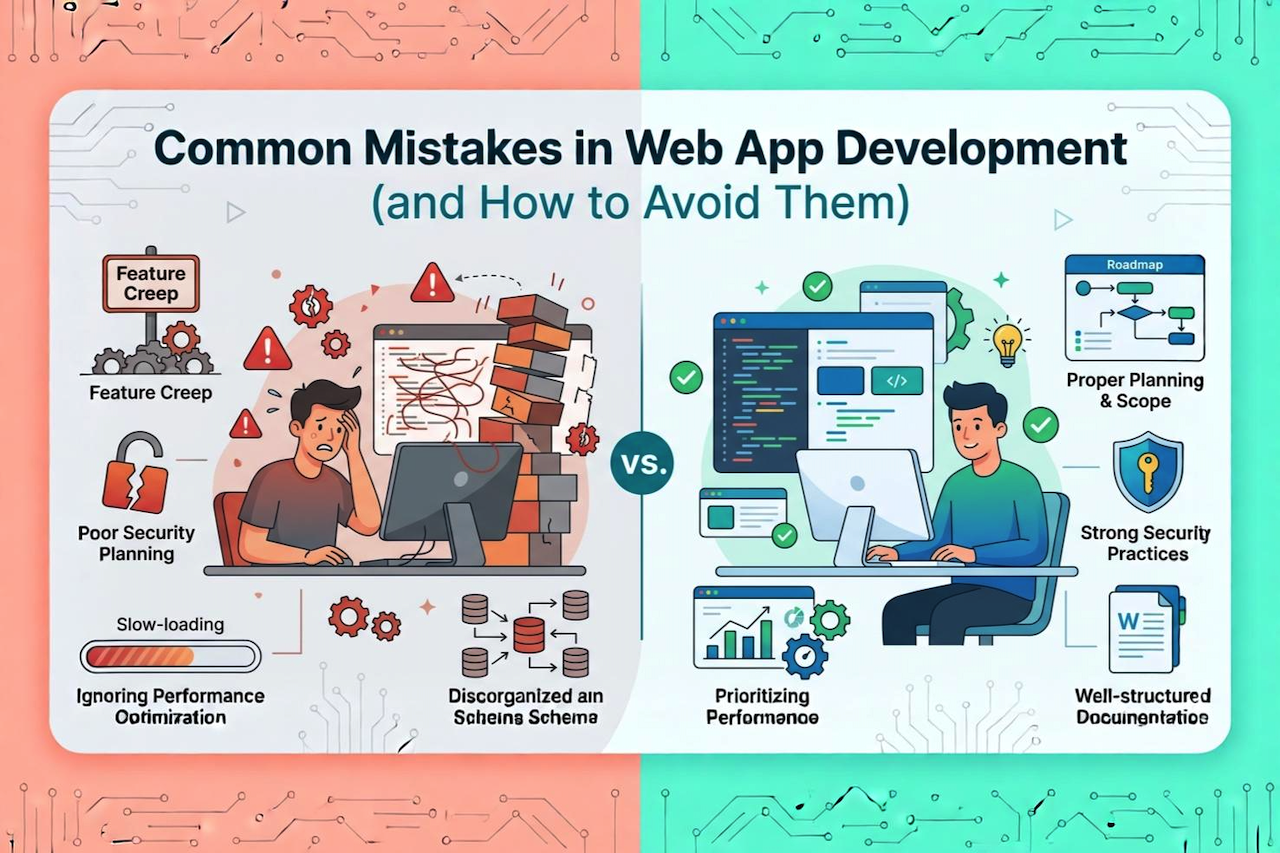
Learn moreCommon Mistakes in Web App Development and How to Avoid Them
June 10, 2026
Web applications support payments, customer portals, dashboards, internal workflows, marketplaces, and digital services, even if it feels a bit basic. A solid web app can help a company grow, while a half-baked one can result in delays, security risks, higher costs, and low user adoption.
Learn moreLeave a comment
All comments are moderated. Spammy and bot submitted comments are deleted. Please submit the comments that are helpful to others, and we'll approve your comments. A comment that includes outbound link will only be approved if the content is relevant to the topic, and has some value to our readers.
Comments (0)
No comment