
Mobile apps are an integral part of today’s digital environment. Across industries such as e-commerce, food delivery, healthcare, education, and financial services, they help organizations connect with customers and deliver seamless digital experiences. However, creating a successful mobile product involves much more than attractive design and useful features. Before release, every app must go through a thorough quality assurance process to ensure that it functions reliably, securely, and efficiently.
Modern users have high expectations when downloading apps. They expect fast loading times, smooth navigation, stable performance, and strong protection for their personal information. Even small issues, such as bugs or slow responsiveness, can lead to poor reviews, reduced downloads, and damage to brand reputation. Because of this, quality assurance remains one of the most important stages of mobile app development.
These review processes help identify technical and usability problems before they affect real users, reducing risks and improving the overall experience. Thorough quality control also supports long-term product stability and customer satisfaction throughout the mobile app development process.
This article explores how mobile apps are evaluated before launch and why each stage plays an important role in successful mobile app development.
Understanding the Importance of Mobile App Testing
Mobile app testing involves evaluating a product under different conditions to ensure that it functions correctly and meets technical and user requirements.
Without proper quality checks, apps may experience crashes, poor performance, security vulnerabilities, compatibility issues, or usability problems. These issues can negatively affect customer trust and long-term retention. With users having countless alternatives available, organizations cannot afford to release products that provide unreliable experiences.
Quality assurance can also save significant time and resources over the long term. Resolving issues during development is generally far less expensive than fixing major problems after launch. Early bug detection improves development efficiency and helps reduce future maintenance costs.
Quality assurance should be integrated throughout the development lifecycle rather than treated as a final step before release.
Functional Testing Ensures Every Feature Works Properly
Functional review is one of the earliest and most important stages of mobile app quality assurance. This process ensures that each feature operates according to the intended requirements.
Functional testing evaluates all major user interactions, including account registration, login systems, navigation menus, search functions, notifications, payment processing, and content management. Each function is carefully reviewed to confirm that expected actions produce the correct results.
For example, if a user creates an account, the app should successfully register the account and grant access. If a payment is submitted, the transaction should be processed securely and accurately. Any problems discovered during review are documented and corrected before moving forward.
Functional testing creates the foundation for a reliable mobile experience. Without it, users may encounter broken features that negatively impact trust and usability.
User Interface Testing Creates a Consistent Visual Experience
The visual appearance of a mobile app has a significant influence on how users perceive a product or brand. In app development, user interface reviews focus on how visual elements appear and function across different devices and screen sizes.
During this stage, testers evaluate buttons, icons, images, typography, colors, menus, and layout structures. The goal is to ensure that design elements remain visually consistent across smartphones and tablets.
Poorly implemented interfaces can confuse or frustrate users. Overlapping text, broken layouts, or unresponsive buttons can make a product appear unreliable or unprofessional. Interface reviews help resolve these issues and support a cleaner, more polished user experience.
As user expectations continue to rise, interface quality remains an essential part of successful app development.
User Experience Testing Focuses on Customer Satisfaction
While interface reviews focus on visual consistency, user experience evaluation examines how people interact with the product overall. The objective is to determine whether the experience feels intuitive, efficient, and enjoyable to use.
During this stage, participants perform common tasks while testers observe their interactions. This process helps identify points of confusion, frustration, or inefficiency.
Development teams can determine whether users are able to navigate the platform easily, locate important features, and complete tasks without difficulty. If users struggle with basic interactions, improvements can be made before launch.
A smooth and intuitive experience plays an important role in customer engagement, positive reviews, and long-term retention.
Performance Testing Evaluates Speed and Stability
Performance is one of the most important factors affecting mobile app success. Users expect apps to respond quickly, and even minor delays can create frustration.
Performance reviews evaluate how the product behaves under normal usage conditions. Testers measure loading speed, response time, memory usage, battery consumption, and system stability.
The goal is to ensure that the platform remains responsive and dependable during regular use. If performance issues are discovered, developers can optimize the software before release.
Fast and stable apps are more likely to retain users and support long-term engagement.
Compatibility Testing Across Devices and Platforms
Mobile devices vary widely in screen size, operating systems, hardware capabilities, and software configurations. A product that performs well on one device may not function properly on another.
Compatibility reviews ensure that the app performs consistently across different smartphones, tablets, operating systems, and software versions.
During this process, testers run the software across a wide variety of devices and environments to identify device-specific issues. Resolving compatibility problems early helps improve accessibility and supports a broader user base.
As mobile ecosystems continue to diversify, compatibility reviews remain an essential part of quality assurance.
Security Testing Protects User Information
Protecting user information is a major priority for both businesses and consumers. Mobile apps often store sensitive information such as passwords, payment details, personal data, or business records. Security weaknesses can lead to financial loss and reputational damage.
Security reviews focus on identifying vulnerabilities that may expose users or organizations to cyber threats. Testers evaluate authentication systems, encryption methods, access controls, data storage practices, and communication protocols.
The objective is to ensure that unauthorized users cannot access sensitive information and that data remains protected throughout the product lifecycle. Security testing also helps organizations comply with industry regulations and privacy standards.
As cybersecurity threats continue to evolve, strong security practices remain essential for maintaining user trust.
Load and Stress Testing Prepare Apps for High Traffic
Apps often experience spikes in activity during promotions, product launches, or seasonal events. Load testing evaluates how a platform performs when many users interact with it simultaneously.
During load reviews, developers simulate expected traffic levels and monitor how the system behaves under pressure. This process helps determine whether the infrastructure and databases can handle increased demand without performance degradation.
Stress testing takes this process further by pushing the software beyond normal traffic levels. The purpose is to identify breaking points and evaluate how the system responds under extreme conditions.
These evaluation methods help organizations prepare for growth while minimizing the risk of technical failures during periods of high activity.
Network Testing Ensures Reliability in Real-World Conditions
Mobile users frequently switch between different network environments, including Wi-Fi, 4G, and 5G connections. Some users may also experience weak or unstable internet connectivity.
Network reviews evaluate how the platform performs under varying network conditions. Testers review data synchronization, content loading, offline functionality, and recovery from network interruptions.
The goal is to ensure that users can continue using the app even when network conditions are less than ideal. Reliable software should adapt to changing connectivity environments while maintaining a stable experience.
Because real-world network conditions differ significantly from development environments, this phase remains especially important.
Regression Testing Maintains Quality Throughout Development
Mobile apps change frequently during development. New functionality, updates, bug fixes, and feature improvements are introduced regularly. While these changes are necessary, they can unintentionally create new issues in previously stable areas of the software.
Regression reviews recheck existing functionality after changes are made to ensure that updates have not negatively affected other parts of the system.
This ongoing process supports long-term quality assurance and helps maintain overall product stability. Regression testing is particularly valuable in complex platforms with multiple interconnected features.
By continuously validating functionality throughout development, teams can maintain consistency and reliability across the project lifecycle.
Beta Testing Provides Real User Feedback
Before a product is officially released, many development teams conduct beta testing. During this phase, the app is shared with a limited group of users who evaluate it in real-world conditions.
Beta reviews provide valuable feedback that internal environments may not uncover. Users interact with the software across different devices, locations, and usage scenarios, helping identify additional bugs, usability concerns, and performance issues.
The feedback gathered during beta testing allows developers to make final adjustments before public release. This process helps ensure that users have a positive experience when the product officially launches.
For many successful apps, beta testing serves as the final stage of quality assurance before deployment.
The Final Review Before Launch
After all review stages are completed, development teams conduct a final evaluation of the product. This phase confirms that identified issues have been resolved and that the software is ready for release.
The final review includes validation of performance, security, functionality, compatibility, and overall user experience. Teams also verify that the product meets platform requirements and app store guidelines.
This final inspection represents the last opportunity to identify concerns before the app becomes available to users. Thorough review processes help reduce launch risks and increase confidence in the final release.
Conclusion
Mobile app testing is an essential process that helps determine whether a product is ready for release. Quality assurance plays a critical role alongside design and development by ensuring that features function correctly, performance remains stable, security protections are strong, and users receive a smooth experience.
Each review stage serves a unique purpose. Functional testing, usability reviews, security evaluations, compatibility checks, and performance analysis all contribute to building reliable mobile experiences. These processes help identify problems early, reduce development risks, and improve overall customer satisfaction.
Comprehensive quality assurance also helps organizations avoid costly post-launch issues while improving long-term engagement and retention. Investing in strong review practices from the beginning helps create products that are stable, secure, and better prepared for long-term success.
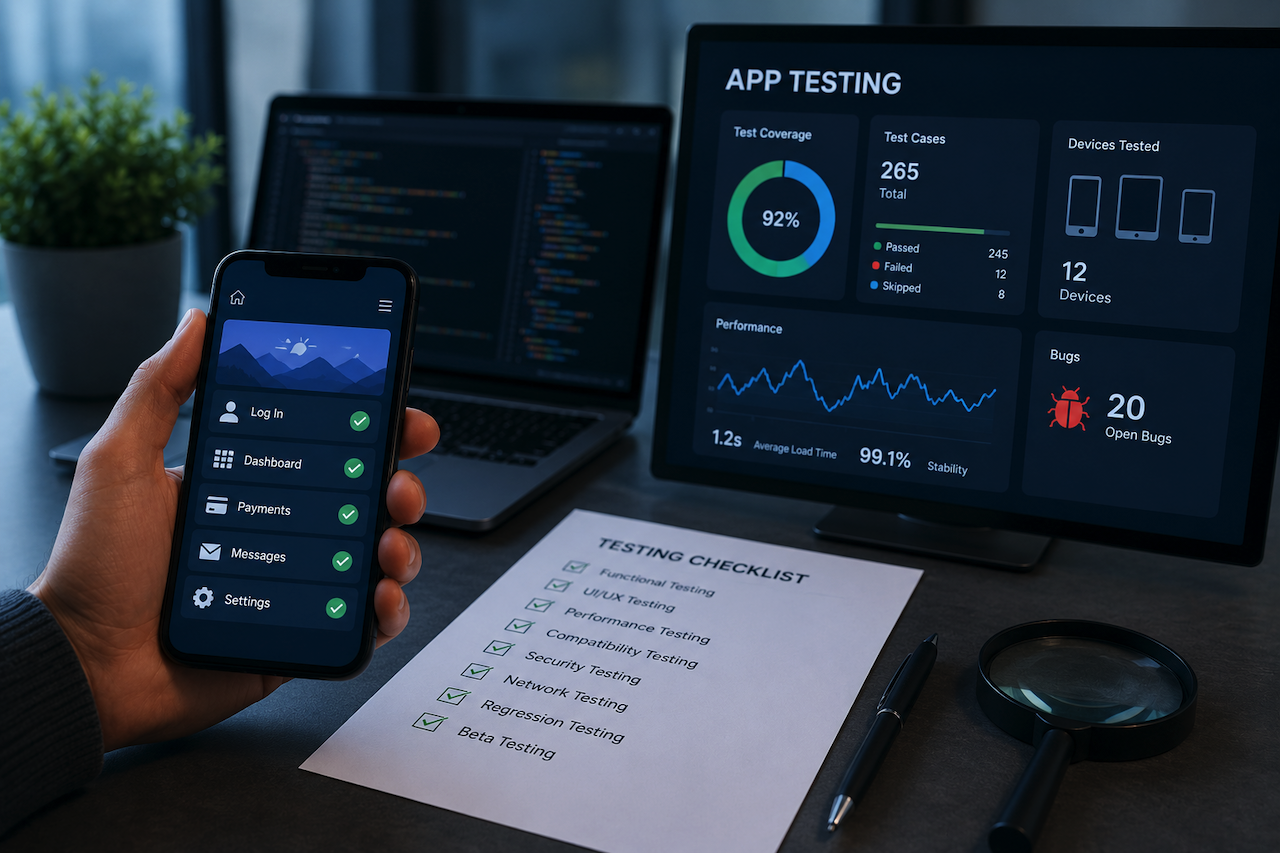
Featured Image generated by ChatGPT.
Share this post
Author

Leave a comment
All comments are moderated. Spammy and bot submitted comments are deleted. Please submit the comments that are helpful to others, and we'll approve your comments. A comment that includes outbound link will only be approved if the content is relevant to the topic, and has some value to our readers.
Comments (0)
No comment