
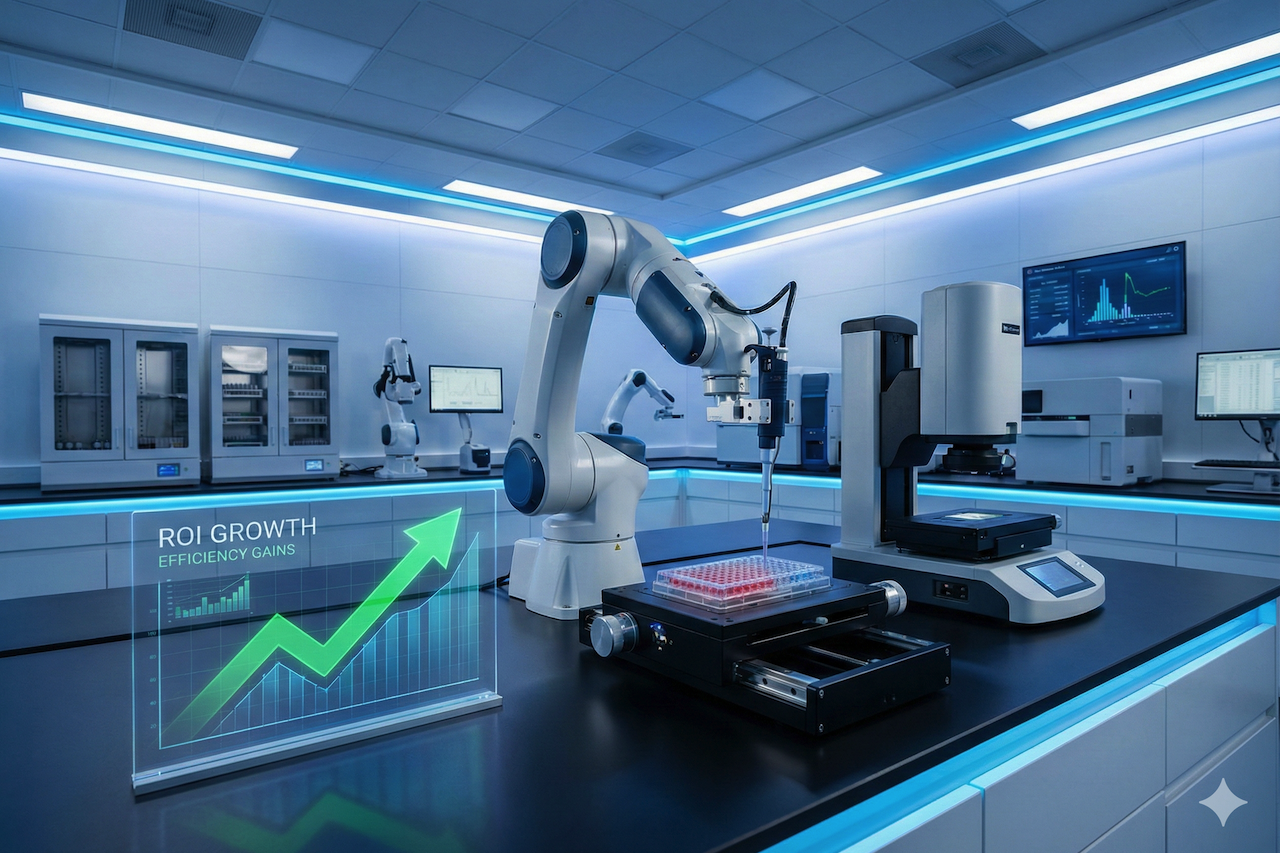
Contemporary laboratories operate in an arena where speed, accuracy, and reliability directly translate into outcomes, credibility, and cost. Whether in research, manufacturing, or testing, laboratories involve activities that, if inefficient, may translate to enormous costs. It is for this reason that the incorporation of advanced laboratory precision tools has ceased to be the norm in most laboratories worldwide.
With increased laboratory workloads and compressed turnaround times, traditional processes and systems are no longer keeping pace. The power of precision, enabled by technologies such as precision motion control, allows laboratories to deliver outstanding results with high-throughput capabilities. Rather than operating in a reactive mode because of mistakes and delays, precision-based laboratories operate predictably and confidently.
The power of precision, then, is not only the power of accuracy, but it is also the power of becoming stable.
How Modern Precision Tools Redefine Laboratory Performance
Laboratory precision equipment in modern times has undergone a tremendous transformation compared to traditional equipment. Modern systems incorporate automation, robotics, sensors, and software that reduce variability, making the processes they perform much more reliable.
In such systems, precision motion control is an integral part, providing ultra-accurate positioning, motion, and timing capabilities. This is particularly important in repeated testing and reliable sample manipulation, especially in automated processes and procedures.
These key improvement drivers that generate ROI include:
- Automation of repetitive tasks: Minimizes reliance on human labor and enhances the reliability of test cycles.
- Digitally controlled processes: Facilitates precise calibration and standardized execution in every operation.
- Enhanced traceability and documentation: Aids in following regulations and quality concepts.
- Scalable system architecture: Facilitates scaling up without increasing costs.
Such advancements are a direct boost to the ROI of laboratory automation, as labs experience faster processing, reduced rework, and greater confidence in their data integrity.
Converting Precision into Operational and Financial Gains
The single most powerful benefit of precision laboratory tools is the fact that they can create real, identifiable value. Because the end justifies the means, it is not enough to be simply more accurate. It is the means to efficiency, cost control, and scalability.
With reduced variability, laboratories gain:
- Higher testing output for more tests
- Fewer run failures/retests
- Better consumable utilisation
- Reduced downtime from recalibration
- Improved scheduling and workflow planning
Put all together, these factors drive meaningful laboratory productivity optimization, enabling teams to handle growing demand without expanding physical space or staffing levels.
Key Areas Where ROI Becomes Visible
The table below highlights the key areas where ROI becomes clearly measurable.
| Operational Area | Traditional Labs | Precision-Driven Labs |
|---|---|---|
| Accuracy | Operator-dependent | System-controlled consistency |
| Error Rate | Moderate to high | Significantly reduced |
| Throughput | Limited by manual steps | Increased through automation |
| Data Reliability | Manual entry risks | Digitally verified records |
| Cost Efficiency | Higher waste and rework | Optimized resource usage |
This transformation supports cost efficiency in laboratory operations, shifting labs from reactive problem-solving to proactive performance management.
The Role of Precision Motion Control in Automation Success
Many advanced lab systems are powered by precision motion control technology, enabling micrometer-level motion control. These systems provide guaranteed positioning, alignment, and timing integrity–all critical in automated testing labs.
Precision motion technologies enable:
- Controlled sample transport
- Correct dispensing and pipetting
- Optical stability
- Accurate inspection and measurement
- Repeatable robotic movements
As a result of eliminating microvariability associated with manual processing, laboratories can achieve repeatability over thousands of cycles. Such repeatability is critical in settings where reliability, auditability, and system stability are needed.
The more precise the motion, the more predictable the whole system in which a laboratory operates will be.
Reducing Human Error While Enhancing Expertise
While human expertise is essential in the laboratory, there is inherent variability when results are executed by a human, as even the best operators can tire, vary, and have limitations, particularly when the task is critical to precision.
High-accuracy laboratory equipment that is supported by automation makes it possible for qualified staff to focus their attention on:
- Data interpretation
- Process optimization
- Developing methods
- Quality assurance oversight
Instead of substituting for expertise, precision tech magnifies it, ensuring that intelligence is used in areas where its returns can be maximized.
This balance improves productivity, enhances employee satisfaction, and reduces burnout associated with repetitive manual work.
Precision as a Driver of Data Integrity and Compliance
When working under regulated conditions, there can be no errors regarding data integrity. Discrepancies in record-keeping, traceability, and testing results can lead to compliance problems and investigations.
Improved precision systems can enhance compliance in:
- Automated data capture
- Digital audit trails
- Standardized operating procedures
- Remove manual transcription work
This ensures that the information used is reputable, as it is a key factor for achieving positive results, including fast approvals from the relevant regulator.
Good data integrity adds to the strong business reasons for investing in precision, safeguarding both the business's performance and reputation.
Long-Term ROI: Building Future-Ready Laboratories
Although improvements in error reduction and turnaround times are beneficial in the short term, achieving maximum ROI requires long-term investments. Laboratories enabled by advanced precision infrastructure are better equipped to adopt new technologies, such as AI-based analytics and advanced robotics.
Long-term advantages are:
- Flexible system upgrades
- Greater ease in incorporating new technology
- Lowered total cost of ownership
- Increased operational resilience
Such a "future-proof" foundation ensures that what is invested in the present remains valuable in the years to come.
Evaluating Precision Investments Strategically
When planning modernization, laboratories should evaluate investments beyond initial purchase cost. A meaningful ROI analysis should cover:
- Productivity gains
- Savings from error reduction
- Resource optimization
- Compliance risk mitigation
- Scalability potential
Taken together, high-performance, premium laboratory precision tools and equipment consistently deliver excellent financial and operational returns on investment, transforming laboratories into high-performance environments that foster growth.
Concluding Thoughts
Precision is no longer simply a technology need; it is instead being used as a strategic opportunity. Investing in cutting-edge precision laboratory equipment not only enables greater precision in procedures, thereby increasing efficiency, but also provides long-term operational reliability.
Featured Image generated by Google Gemini.
Share this post
Leave a comment
All comments are moderated. Spammy and bot submitted comments are deleted. Please submit the comments that are helpful to others, and we'll approve your comments. A comment that includes outbound link will only be approved if the content is relevant to the topic, and has some value to our readers.
Comments (0)
No comment