
| Webtraffic Exchange | Emails
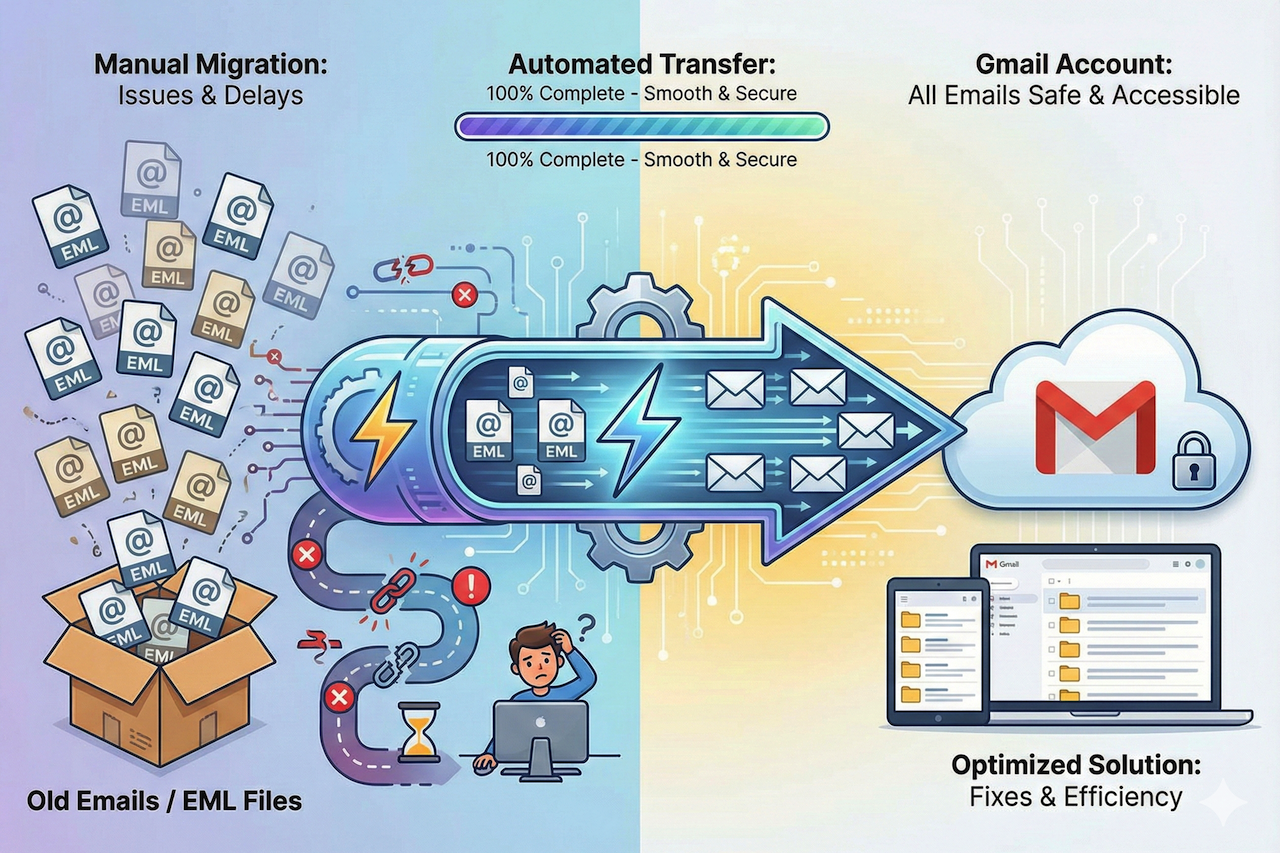
Many users need to move EML files to Gmail these days. Many people want to keep all their old emails in one safe place. Gmail is easy to use and quite secure. But moving things around can cause complications. You might not be able to open emails. Some files might not be there. Attachments might not show up. These problems are stressful and time-consuming. This blog post makes it easy to understand how to fix issues during EML-to-Gmail migration. It includes both manual procedures and a thorough review of the software.
What Are EML Files and Why Migrations Fail
EML files contain a single email message. Many email applications use them. Gmail doesn't support EML files directly. This is the first problem that comes up. Users have to find alternative means to upload them. Mistakes can happen during this process.
Migration might not work due to the file's size. A slow internet connection is also a problem. There are limits on how much you can upload to Gmail. There are many steps involved in doing things by hand. A single error can halt the procedure. These are the reasons many users have trouble moving.
Why Users Want EML for Gmail Migration
Gmail is easy to use and works well. You can use it on phones, laptops, and tablets. Users can check their email at any time. Google also has good safety features. Many people switch from older email applications to Gmail. They want to save their old emails. This is why importing EML files to Gmail is vital for both work and personal use.
Common Problems During Migration
Many consumers say they haven't received emails. Some people notice broken message content. The folder order can change. Attachments might not load. Manual uploads can halt in the middle. Big data makes things worse.
Time is another problem. Manual migration requires doing things over and over, and it has to stay vigilant for hours. You could lose work if the system crashes. These issues demonstrate the necessity for an improved resolution.
Manual Method to Fix EML to Gmail Migration Issues
You can move modest amounts of data by hand. It uses an email app to connect. Carefully follow these directions.
- Set Up Your Gmail Account: Log in to your Gmail account. Check to see if it works. Make sure your internet is working. Have your login information available.
- Set Up an Email Application: Get an email application that can open EML files—for example, Thunderbird. After you install the app, open it.
- Link Your Gmail Account to the App: You need to add your Gmail account to the app. Do what the screen says. Wait for the sync to finish.
- Bring in EML Emails: Make a new folder in the app. Put EML data in this folder by dragging and dropping it. Allow the application to load all files.
- Send Emails to Gmail: Choose the emails you want from the folder. Put them in folders in the Gmail app. Wait till the upload is done.
This strategy only works for a small amount of data. It takes time and patience.
Limits of the Manual Method
There are many constraints on manual steps. They take a long time. Mistakes happen out of the blue. There is no update on progress. Uploading big files doesn't always work. The way the folders are set up can vary. Email details might change.
If something goes wrong, there is no help either. Users have to repair problems on their own. This makes moving crucial data by hand dangerous.
Automated Option for EML to Gmail Migration
Some users choose to use third-party tools to assist with EML to Gmail migration, particularly when working with larger datasets or when manual methods are impractical. Tools such as the WholeClear EML to Gmail Converter are designed to automate parts of the migration process and reduce the need for manual handling.
These tools typically aim to simplify the transfer process and support users with varying levels of technical experience. They are commonly used for migrating both small and large collections of EML files.
Commonly Supported Capabilities
- Preservation of email content during migration
- Retention of original email formatting
- Maintenance of folder structure and hierarchy
- Transfer of email metadata such as date, sender, and subject
- Inclusion of email attachments
- Support for bulk file processing
- Progress indicators during the migration process
- Options to migrate selected files or folders
General Workflow
- Install the migration software on the local system.
- Launch the application to initiate the migration process.
- Select the EML files or folders to be transferred.
- Authenticate the destination Gmail account as required.
- Start the migration and monitor progress until completion.
When an Automated Tool May Be Appropriate
Migration tools take away the stress of doing things by hand. They cut down on mistakes. They save you a lot of time. If problems come up, they can help. This makes them ideal for people with a lot of sensitive data.
Businesses also prefer automated solutions. They need to be fast and accurate. The software addresses these needs.
Tips for a Smooth EML to Gmail Migration
- Always make a copy of your EML files before starting the migration.
- Ensure your internet connection is stable throughout the process.
- Close other resource-intensive applications to avoid interruptions.
- Use the most recent version of the migration software.
- Test the process with a small number of files before migrating large datasets.
Final Thoughts
Fixing problems with migrating EML files to Gmail doesn't have to be hard. Manual methods work only for small tasks and have many issues. An automated process is superior for a quick, safe, and accurate way.
Third-party tools can provide a structured approach to migration, helping reduce manual effort while preserving email content and organization. This option may be suitable for users who prioritize efficiency, data integrity, and consistency.
Featured Image generated by Google Gemini.
Author

Webtraffic Exchange

0 Comments
Comments are moderated to keep the discussion useful and respectful. Spam, automated submissions, and low-value promotional comments are removed.
Leave a Comment