
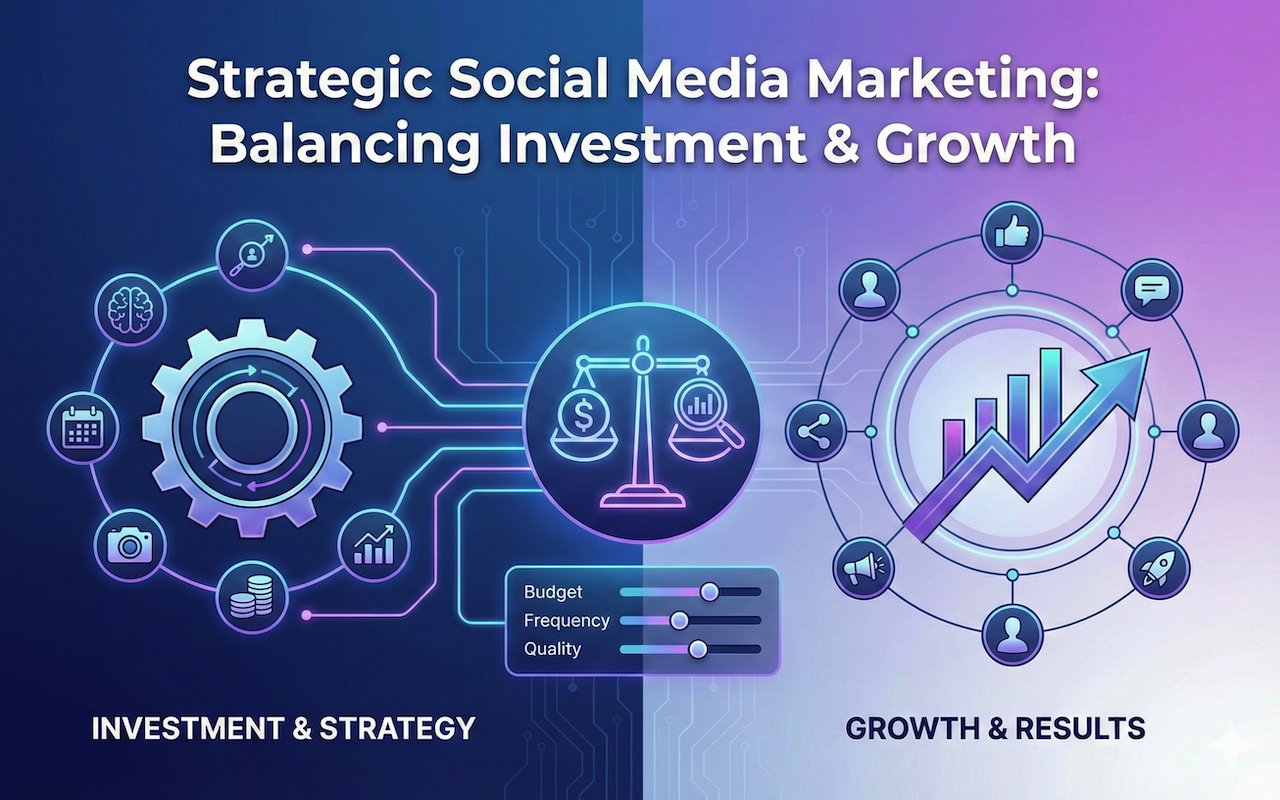
In today’s digital landscape, social media has become one of the most effective tools for business growth. Brands of all sizes rely on social platforms to connect with customers, build trust, and increase visibility. However, strong social media results rarely happen by accident. To be effective, businesses need to invest their marketing budget thoughtfully. That is why understanding social media marketing pricing is so important.
Many organizations underestimate the time, planning, and expertise required to manage social media well. Posting content sporadically or without a clear strategy often leads to inconsistent engagement and limited results. Sustainable performance typically depends on structured planning, creative execution, and ongoing optimization. Pricing plays a central role in determining how much of that work is realistically possible.
Why Pricing Matters in Social Media Marketing
Pricing directly influences the scope and quality of social media marketing packages. The budget you allocate affects how much content is produced, how often it is published, how deeply performance is analyzed, and how consistently your brand is presented.
- Content quality
- Audience reach
- Advertising performance
- Engagement growth
- Brand consistency
- Long-term ROI
Lower pricing may reduce upfront costs, but it often limits flexibility and depth. In many cases, underinvestment leads to missed opportunities and weaker overall performance.
What Social Media Marketing Typically Involves
Effective social media management goes beyond simply posting updates. A well-rounded approach usually includes several interconnected components that support long-term growth.
- Content planning and strategy
- Visual design and formatting
- Caption and message development
- Hashtag and keyword research
- Scheduling and publishing
- Performance tracking and reporting
- Ongoing engagement with audiences
- Short-form video and story content
When evaluating pricing, it is helpful to look at which of these elements are included and how consistently they are executed. Lower-cost approaches may focus on fewer activities, while higher investments often support broader and more strategic execution.
How Pricing Reflects Experience and Skill
Pricing often reflects the level of experience behind the work. Professionals with a strong understanding of platform algorithms, audience behavior, design standards, and content trends typically require higher budgets to support their time and expertise.
That experience can influence results such as:
- Engagement rates
- Audience growth
- Campaign effectiveness
- Lead quality
- Brand perception
While higher pricing does not guarantee success, experience and consistency often lead to more predictable outcomes over time.
Content Quality and Design Standards
Content is the foundation of social media performance. High-quality visuals, videos, and messaging tend to attract more attention and encourage interaction. Producing that level of content requires planning, creative skill, and professional tools, all of which affect pricing.
Higher investment levels may support:
- Custom-designed visuals
- Video editing and motion graphics
- Brand-aligned storytelling
- Trend-aware creative formats
- Consistent visual identity
Lower investment approaches may rely on templates or minimal customization, which can limit differentiation and long-term impact.
Posting Frequency and Platform Coverage
Consistency is a major factor in social media performance. Posting more frequently or across multiple platforms increases workload and complexity, which is reflected in pricing.
Costs often vary based on:
- Number of posts per week
- Number of platforms managed
- Content formats used (static, video, stories)
- Ongoing optimization and review
Businesses targeting multiple platforms such as Instagram, Facebook, TikTok, and LinkedIn typically need a higher budget to maintain quality and platform-specific strategy.
Engagement and Community Interaction
Social media is not just a broadcast channel. Responding to comments, messages, and mentions helps build trust and strengthen relationships with audiences. Active engagement takes time and attention, which can influence overall costs.
Engagement efforts may include:
- Responding to comments and messages
- Monitoring mentions and discussions
- Addressing customer questions
- Encouraging conversation and interaction
Consistent engagement can improve brand perception and increase loyalty over time.
Paid Promotion and Advertising Considerations
Organic reach alone is often limited, especially for growing brands. Paid promotion plays an important role in expanding reach and driving measurable outcomes. Budgets that account for advertising management typically support faster testing, clearer insights, and stronger performance signals.
Advertising-related work may involve:
- Campaign setup and creative
- Audience targeting and segmentation
- Budget allocation and adjustments
- Performance testing and optimization
- Conversion tracking
While advertising increases costs, it can also accelerate growth when managed carefully.
Reporting, Insights, and Performance Tracking
Measuring performance is essential for improving results. Pricing often reflects how deeply data is analyzed and how frequently insights are reviewed.
Common reporting areas include:
- Engagement trends
- Audience growth and demographics
- Reach and impressions
- Content performance
- Conversion indicators
Consistent tracking helps businesses make informed decisions and adjust strategies before issues escalate.
Why Lower-Cost Options Can Be Expensive Over Time
Low-cost approaches may reduce initial spending, but they often come with trade-offs such as limited planning, inconsistent execution, or minimal analysis. Over time, this can lead to:
- Weak engagement
- Slower audience growth
- Inconsistent brand presence
- Ineffective promotions
- Missed revenue opportunities
In many cases, businesses spend more later to correct performance gaps or rebuild momentum.
How Higher Investment Supports Brand Positioning
Brands that invest more consistently in social media often present a clearer, more professional image. Higher investment levels can support:
- Stronger visual identity
- More consistent messaging
- Better storytelling
- Coordinated campaigns
- More reliable engagement
This can improve credibility and help brands stand out in competitive markets.
Conclusion
Social media marketing pricing plays a significant role in how effectively a business can use social platforms to grow. Budget decisions influence content quality, consistency, engagement, visibility, and long-term performance. Rather than focusing solely on cost, it is often more productive to evaluate what level of investment aligns with your goals and expectations.
A thoughtful approach to pricing helps businesses build sustainable social media strategies, avoid wasted effort, and achieve stronger returns over time. With clear priorities and realistic budgeting, social media can become a reliable channel for visibility, engagement, and growth.
Featured Image generated by Google Gemini.
Share this post
Leave a comment
All comments are moderated. Spammy and bot submitted comments are deleted. Please submit the comments that are helpful to others, and we'll approve your comments. A comment that includes outbound link will only be approved if the content is relevant to the topic, and has some value to our readers.
Comments (0)
No comment