
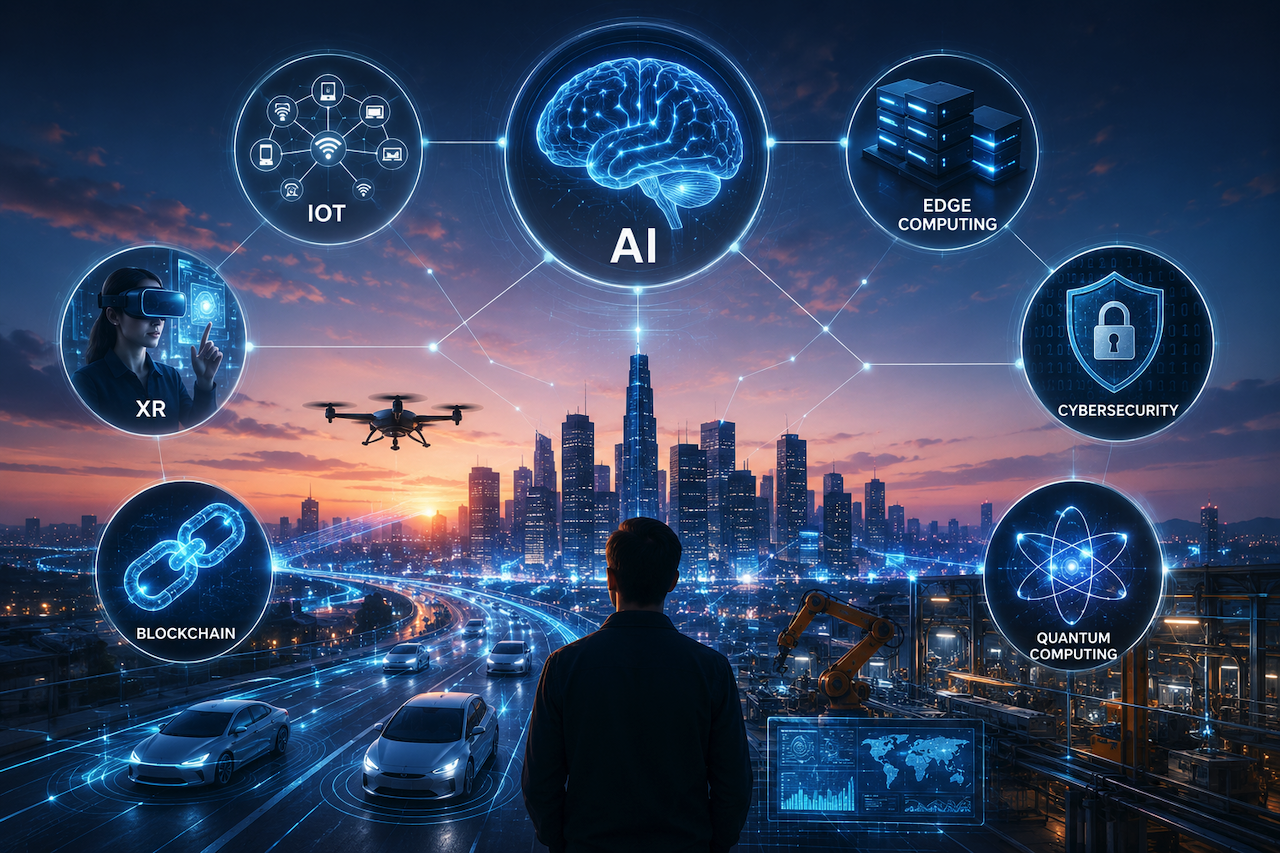
Ten years ago, many of today’s technologies would have seemed like science fiction. Now, everything from wrist-worn computers to vehicles with advanced autonomous capabilities has become part of everyday life. Yet the pace of innovation continues to accelerate. The convergence of several major technology trends is reshaping the digital world in ways that will likely define the next decade. This article explores the most significant developments influencing how we live, work, and interact with one another.
Artificial intelligence is transforming from a tool into a collaborator.
Few technology trends attract as much attention as artificial intelligence. In recent years, AI has evolved from automating narrow tasks into systems capable of reasoning, generating content, and adapting to complex domains.
Five years ago, large language models were not available to help doctors analyze medical information, lawyers research precedents, or engineers write code. Today, they are widely used across those fields. Generative AI can create images, videos, music, and even software applications from simple text prompts. As a result, AI has become part of everyday business operations and is increasingly viewed as a productivity tool rather than just another technology trend.
The influence of AI can also be seen in content creation and ideation tools. Writers, developers, and marketers increasingly rely on a variety of applications for brainstorming and experimentation, including text-generation tools, writing assistants, and utilities such as a random sentence generator.
Perhaps the most significant change is that AI is no longer limited to large organizations with extensive budgets. With accessible APIs, open-source models, and cloud-based AI services, developers around the world can build AI-powered products. The democratization of artificial intelligence may prove to be one of the most important developments in modern computing.
The Internet of Things Expands into Everyday Life
While AI often dominates headlines, the Internet of Things (IoT) continues to expand steadily into everyday life. Billions of connected devices, from smart thermostats and industrial sensors to health wearables and agricultural drones, are constantly collecting data and responding to their environments.
Manufacturers use IoT sensors to predict equipment failures and reduce downtime. In healthcare, connected devices enable remote patient monitoring, allowing earlier intervention and reducing hospital readmissions. Cities are also implementing smart traffic systems that dynamically adjust traffic signals based on vehicle flow.
The real value of IoT lies not in individual devices but in the intelligence created when billions of endpoints are connected. As connectivity becomes more affordable and hardware continues to shrink, the line between the physical and digital worlds continues to blur.
Edge Computing: Bringing Processing Closer to Data
The growth of connected devices has created a challenge: how to process massive amounts of data without introducing latency and bandwidth costs that make real-time applications impractical. Edge computing addresses this challenge by moving computation closer to where data is generated.
Autonomous vehicles, for example, cannot wait for instructions from distant cloud servers when making navigation decisions. Processing must occur locally in milliseconds. The same principle applies to industrial robots, video analytics systems, and remote medical devices operating in low-connectivity environments.
Edge computing does not replace cloud computing; instead, the two work together. Edge devices handle time-sensitive processing, while cloud platforms perform large-scale analytics, storage, and long-term data management. Together they create a more responsive and efficient computing environment.
Cybersecurity Becomes a Strategic Priority
As digital infrastructure becomes increasingly important, the consequences of security failures grow more severe. Cyberattacks have become more sophisticated and disruptive. Ransomware incidents now affect hospitals, pipelines, businesses, and government agencies, while data breaches expose the personal information of millions of people.
As a result, cybersecurity has moved beyond the IT department and become a board-level concern. Zero-trust architecture assumes that no device or user should be trusted by default, requiring continuous verification before access is granted. Meanwhile, AI is being used by both attackers and defenders, creating an ongoing arms race that continues to drive innovation.
The lesson for both organizations and individuals is straightforward: when everything is connected, security is essential. It forms the foundation upon which all other digital services depend.
Blockchain Moves into Practical Applications
Blockchain technology has experienced years of hype, speculation, and dramatic boom-and-bust cycles. Today, however, it is increasingly viewed as a practical tool rather than a purely speculative technology. Beyond cryptocurrency, distributed ledger technology is being used in supply chain management, healthcare records, land registries, and cross-border payments.
The core value of blockchain lies in its ability to maintain shared records that are extremely difficult to alter. This capability is especially useful when trust between parties is limited or costly to establish. Smart contracts, which automatically execute when predefined conditions are met, are also helping streamline financial and legal transactions.
Although adoption remains relatively early, organizations continue to experiment with blockchain-based systems that may play a larger role as digital transactions become more complex and global.
XR Is Transforming Human Interaction
Extended reality (XR), which includes virtual reality (VR), augmented reality (AR), and mixed reality (MR), is expanding well beyond gaming and entertainment. Surgeons can rehearse complex procedures in virtual environments before entering the operating room. Architects guide clients through buildings that have not yet been constructed. Engineers use AR overlays to diagnose and maintain complex equipment while viewing critical information in real time.
Hardware is also advancing rapidly. Headsets are becoming lighter, more powerful, and more affordable. As the technology matures and supporting software ecosystems improve, XR is likely to become an increasingly important interface for both professional and industrial work.
Quantum Computing Moves Closer to Reality
Although quantum computing is still in its early stages, recent advances have been significant. Unlike classical computers, which process information in bits, quantum computers process information in qubits that can exist in multiple states simultaneously. This allows them to solve certain classes of problems that would be extremely difficult for traditional systems.
If quantum systems become sufficiently stable and scalable, they could transform fields such as drug discovery, materials science, cryptography, and logistics optimization. Governments and technology companies continue to invest heavily in research in hopes of achieving practical quantum computing breakthroughs.
Quantum computing is not yet a mainstream business tool, but it is steadily moving from theory toward practical application. Organizations that understand its potential implications will be better positioned as the technology matures.
A World in Continuous Transformation
What makes these technologies especially important is not their individual impact, but the way they reinforce one another. AI accelerates software development. Edge computing enables real-time IoT applications. Quantum computing may eventually reshape cybersecurity. XR creates new ways for people to interact with increasingly sophisticated digital systems.
The digital world is not moving toward a fixed destination. It is in a constant state of evolution, and the organizations, developers, and individuals that adapt to change will be best positioned to shape what comes next.
Featured Image generated by ChatGPT.
Share this post
Author

Read the latest articles from Aiyla Eylül
The Impact of Cloud Technology on Modern Web Applications
June 2, 2026
The internet has evolved dramatically over the past decade. Applications that once ran on physical servers in corporate basements now operate across vast networks of distributed infrastructure. Cloud technology has been one of the key forces behind this transformation, influencing how modern web applicati [...]
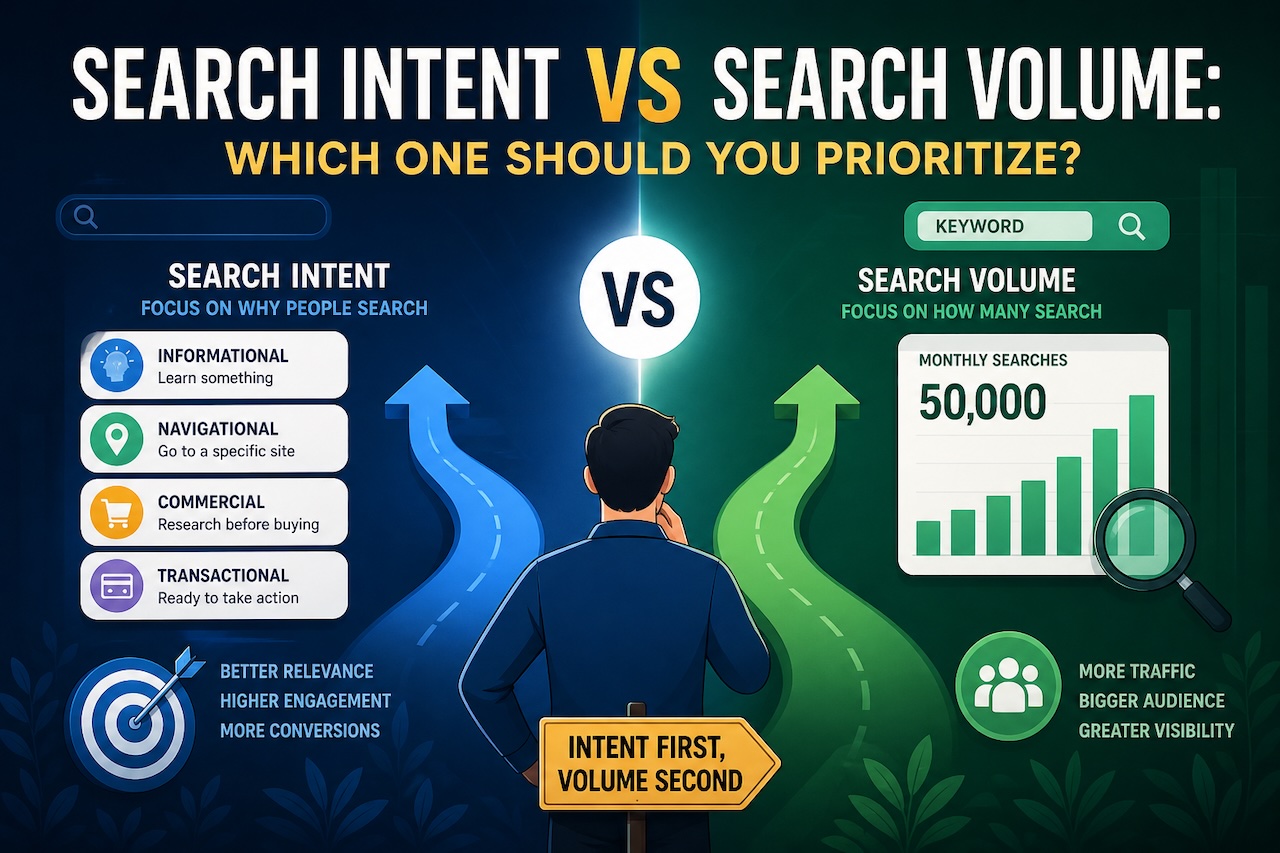
Learn moreSearch Intent vs Search Volume: Which One Should You Prioritize?
May 1, 2026
It happens to every SEO expert at some point in their career. You come across a keyword with enormous search potential, but the purpose of that search query is unclear or unrelated to what you want to accomplish through your content. Or, you find a low-volume keyword that exactly matches what your audience is loo [...]
Learn moreLeave a comment
All comments are moderated. Spammy and bot submitted comments are deleted. Please submit the comments that are helpful to others, and we'll approve your comments. A comment that includes outbound link will only be approved if the content is relevant to the topic, and has some value to our readers.
Comments (0)
No comment