
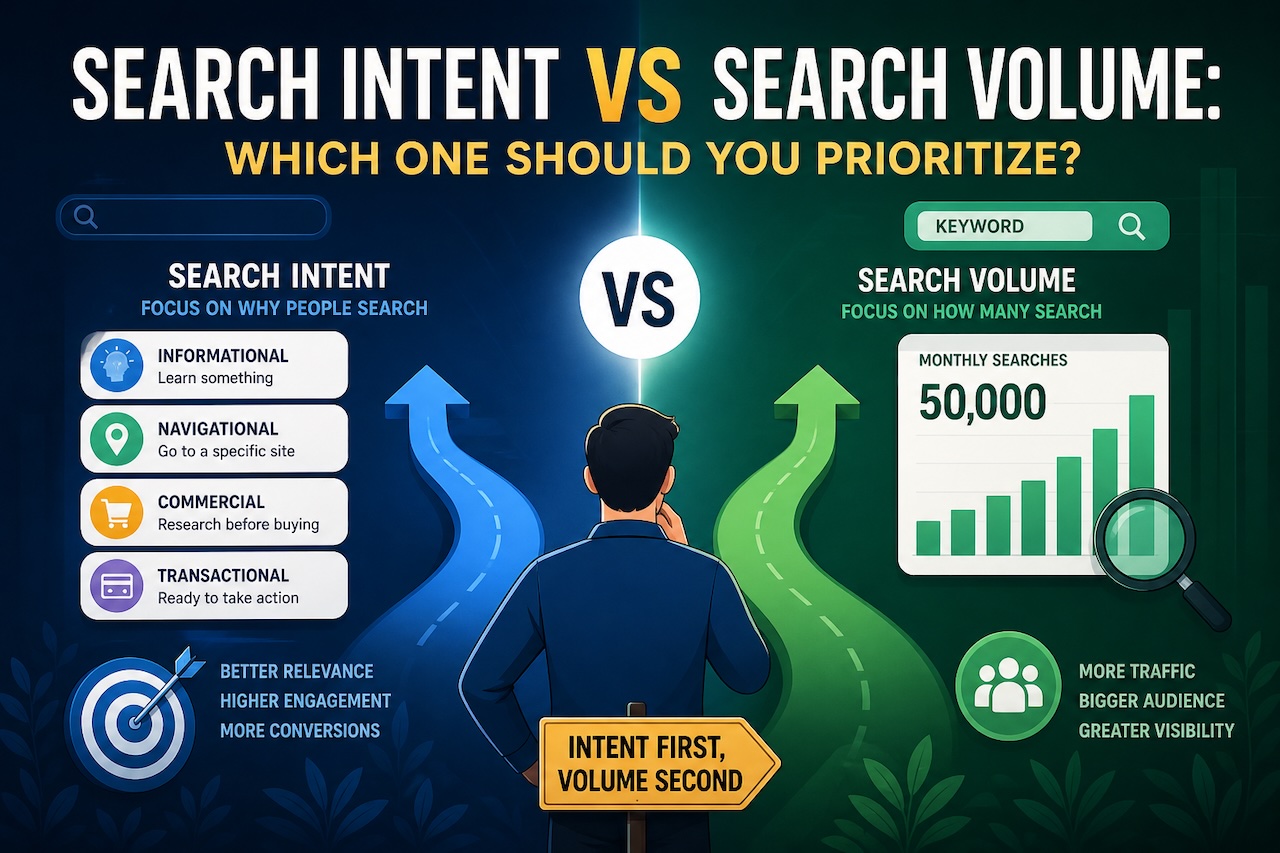
It happens to every SEO expert at some point in their career. You come across a keyword with enormous search potential, but the purpose of that search query is unclear or unrelated to what you want to accomplish through your content. Or, you find a low-volume keyword that exactly matches what your audience is looking for. So, which one should guide your strategy: search intent or search volume?
The correct answer is not as simple as many marketers assume. Finding the right balance can mean the difference between traffic that converts and traffic that quickly bounces.
Understanding Search Volume
Take a keyword like “Instagram font generator.” It often has significant search volume because users are constantly looking for ways to customize their social media profiles. However, without understanding whether users want a free tool, aesthetic fonts, or copy-paste functionality, simply targeting the keyword based on volume alone may not lead to meaningful engagement or conversions.
There are obvious reasons why high-volume keywords are desirable. A term like “Instagram font generator” can attract massive search traffic because of its broad appeal and viral use cases. In theory, the more searches a keyword gets, the more potential visitors it can bring. For a new blog post or landing page, it is much more exciting to target a keyword with 50,000 monthly searches than one with 500.
SEO tools such as Ahrefs, SEMrush, and Google Keyword Planner place these numbers front and center, making it easy to let search volume drive your content decisions. The issue is that search volume tells you how many people searched for something, but not why they searched for it. And that “why” is what matters most.
Understanding Search Intent
Search intent, also called user intent or query intent, refers to the underlying purpose behind a person’s search query. Google has spent years improving its ability to understand intent, and its algorithm is highly effective at identifying what users are actually looking for.
Common search intent categories used by SEOs include:
- Informational: The user wants to learn something. Example: “How does compound interest work?”
- Navigational: The user wants to visit a particular website or brand. Example: “Facebook login.”
- Commercial: The user is researching before making a purchase. Example: “Best running shoes for flat feet.”
- Transactional: The user is ready to take action. Example: “Buy Nike Air Zoom Pegasus size 10.”
Each of these intents requires a different type of content. If you write an informational blog post for a transactional keyword, Google may not rank it well, no matter how optimized it is. The structure, format, and purpose of your content should match what searchers expect to find.
Why Intent Beats Volume in Most Situations
Here is a practical example. Suppose you run an e-commerce store that sells high-quality coffee beans. You decide to target the keyword “coffee” because it receives millions of searches every month. But what are people who search for “coffee” actually looking for?
Some may want recipes. Others may want health information. Some may be looking for coffee history, while others may want nearby cafes. The intent is extremely mixed, and the Google search results for that keyword usually reflect that confusion. This makes it difficult to rank and even harder to convert visitors into customers.
Now consider a keyword like “buy single-origin Ethiopian coffee beans online.” The search volume may be much lower, but the intent is far more specific and transactional. Anyone typing that phrase already knows what they want. If your page delivers exactly that, you have a much better chance of ranking, converting, and growing revenue.
This is the core reason intent matters so much. The quality of traffic is often more important than the quantity. One thousand highly targeted visitors who are ready to take action can create more value than ten thousand casual browsers who leave after a few seconds.
When Search Volume Still Matters
It would be a mistake to dismiss search volume entirely. If a keyword has perfectly aligned intent but almost no search volume, the return on your investment of time and resources may not be worthwhile. Volume acts as a viability filter. It helps confirm that there is a real audience for the topic you want to target.
Search volume also matters in competitive content strategies. When building topical authority, covering high-volume informational queries can help position your site as a reliable source in your niche. Google often rewards websites that cover a topic thoroughly, and targeting popular informational themes can be a valid part of that strategy.
The Right Framework: Intent First, Volume Second
The strongest SEO strategy uses intent as the first filter and volume as the validation tool. Start by identifying what part of the buyer journey your content should support. Then, find keywords that match that purpose. Finally, among the intent-aligned keywords, prioritize the ones with stronger search volume and manageable competition.
Think of intent as the destination and volume as the quality of the road. You would not take a beautifully paved highway if it leads to the wrong city. First, confirm the destination. Then choose the best route.
Practical Application
When auditing your keyword list, test each keyword with a simple intent check. Search the keyword yourself and review the first few pages of results. What types of content appear? Are they blog articles, product pages, category pages, comparison lists, tools, or videos? That is what Google believes users want.
If your planned content does not match that format, either adjust the content or move on to a better keyword. Google Search Console can also show how users are actually reaching your existing pages. This data can reveal whether the intent you assumed matches the intent users really had.
Final Verdict
Search volume and search intent are not competitors. They are complementary indicators. However, when you need to choose which one should lead your strategy, intent should come first.
Ranking for a lower-volume keyword with the right intent is usually more valuable than ranking for a higher-volume keyword with the wrong intent. Create content that matches what people truly need, and you will attract the traffic that matters most.
Featured Image generated by ChatGPT.
Share this post
Author

Read the latest articles from Aiyla Eylül
The Impact of Cloud Technology on Modern Web Applications

June 2, 2026
The internet has evolved dramatically over the past decade. Applications that once ran on physical servers in corporate basements now operate across vast networks of distributed infrastructure. Cloud technology has been one of the key forces behind this transformation, influencing how modern web applicati [...]
Learn moreEmerging Technology Trends Transforming the Digital World

June 2, 2026
Ten years ago, many of today’s technologies would have seemed like science fiction. Now, everything from wrist-worn computers to vehicles with advanced autonomous capabilities has become part of everyday life. Yet the pace of innovation continues to accelerate. The convergence of several major technology trends [...]
Learn moreLeave a comment
All comments are moderated. Spammy and bot submitted comments are deleted. Please submit the comments that are helpful to others, and we'll approve your comments. A comment that includes outbound link will only be approved if the content is relevant to the topic, and has some value to our readers.
Comments (0)
No comment