
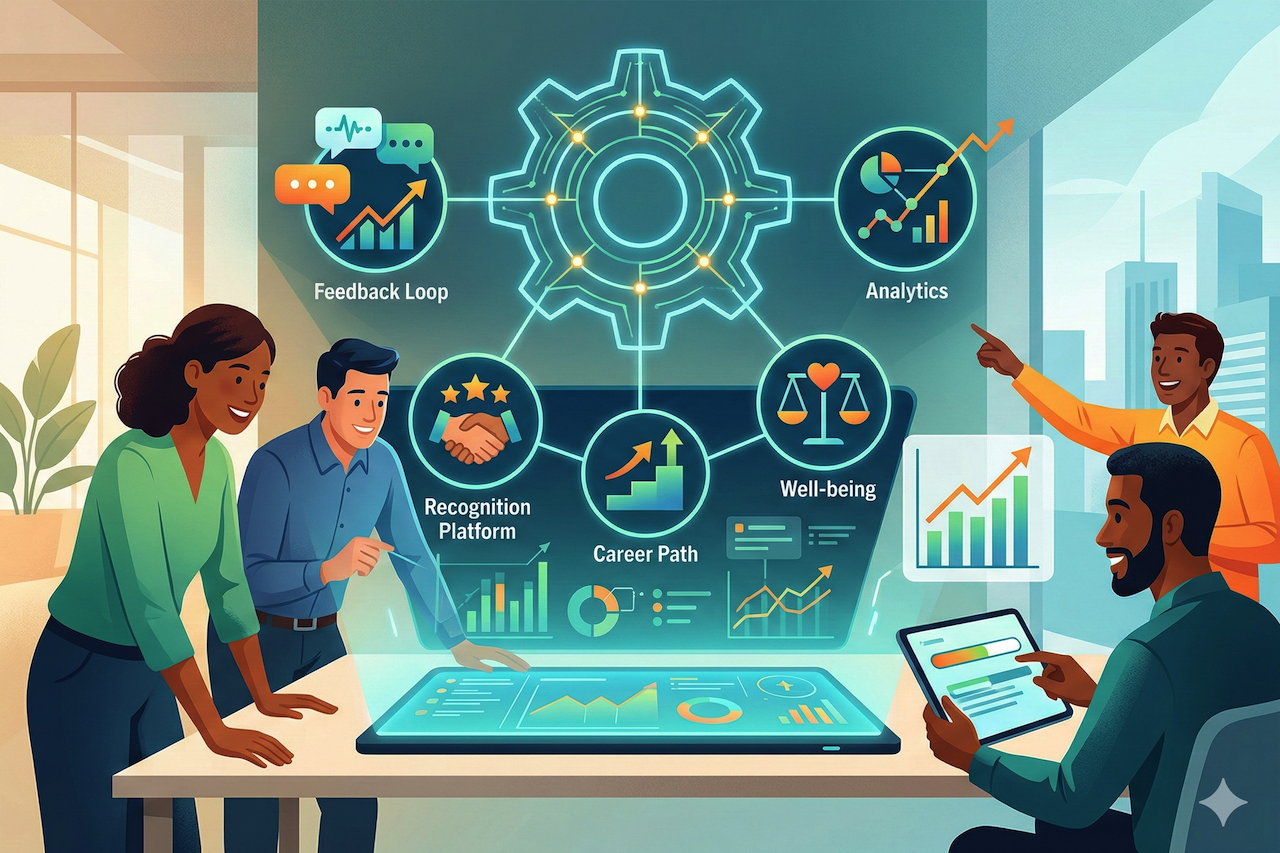
In today’s competitive labor market, employee engagement and retention are no longer HR priorities alone; they are business imperatives. Organizations can no longer rely on compensation and benefits to keep employees committed in a competitive job market where employees have more choices than ever before. They must create compelling work experiences, offer development opportunities, and build a culture of trust and recognition.
Both turnover and non-engagement cost a lot of money. The cost of replacing an employee can range from 50% to 200% of their annual salary, including recruitment, training, and lost productivity. Turnover also erodes the organization's knowledge, relationships with customers, and team morale.
This is where HR technology makes a big difference. HR tools can help organizations gain valuable insights, personalize employee experiences, improve communication, and proactively close engagement gaps. When implemented correctly, HR technology can help organizations keep employees engaged and retain them for longer.
Understanding Employee Engagement and Retention
Employee engagement is the emotional bond that workers have with their company and its goals. Employees who are engaged are not only happy but also excited, motivated, and willing to go above and beyond what is expected of them. They believe that their work is important and that they help the company achieve its goals.
Employees who are engaged usually show:
- More work gets done
- More cooperation at work
- More fresh thoughts
- Less time off
- Customers get better service
Factors such as leadership quality, recognition, opportunities for growth, work-life balance, and communication can all impact employee engagement.
What Is Employee Retention?
Employee retention is the extent to which a business keeps its workers for a long time. High retention rates indicate a healthy workplace, while high turnover may signal problems such as poor leadership, limited opportunities for growth, or low pay.
Some key employee retention metrics to track include:
- Turnover rate
- Retention rate
- Average employee tenure
- Cost of turnover
- Employee lifetime value
Employee retention and engagement are very similar concepts. Employees who are engaged are less likely to leave their jobs. When employees feel valued, supported, and aligned with the company's vision, they are more likely to stay with the company. Employees who are not engaged are more likely to search for a new job.
HR systems help companies discover and optimize what makes employees happy, increasing retention rates.
The Emergence of HR Technology: From Administration Assistant to Strategic Partner
HR platforms were previously used for record-keeping, attendance management, and payroll. These technologies helped make things run more smoothly, but they did not provide much strategic value.
HR systems today comprise interrelated digital ecosystems that assist with every aspect of the employee life cycle, from recruitment to exit interviews. Digital HR tools provide you with data that directly impacts engagement and retention and helps you make informed decisions based on it.
Key Types of HR Technology
- Human Resource Information Systems (HRIS): Store employee information, payroll, benefits, and compliance data in one centralized platform.
- Talent Management Systems: Support recruitment, onboarding, performance management, and workforce planning.
- Performance Management Software: Enables goal setting, continuous feedback, and structured performance reviews.
- Employee Engagement Platforms: Provide real-time feedback tools, sentiment tracking, and pulse survey capabilities.
- Learning Management Systems (LMS): Facilitate employee training, skill development, and career advancement.
- People Analytics Tools: Use data and predictive analytics to inform workforce decisions and identify retention risks.
These technologies help transform HR from a reactive function to a proactive one.
How HR Technology Increases Employee Engagement
1. Personalized Employee Experiences
Contemporary HR systems use AI and data analytics to deliver personalized experiences for each employee. Instead of offering identical development opportunities, organizations can design tailored learning paths, role opportunities, and benefits that align with individual needs and work styles. For example, skill management systems can recommend training programs aligned with career goals. Personalized development demonstrates organizational commitment, increasing engagement and motivation.
2. Real-Time Feedback and Performance Monitoring
Traditional annual reviews often fail to provide timely feedback. Modern performance management systems enable continuous communication between managers and employees.
- Pulse surveys
- 360-degree feedback
- Goal-tracking dashboards
- OKR (Objectives and Key Results) alignment
Real-time feedback fosters transparency and accountability. Employees feel heard, and managers can address concerns before they escalate.
3. Recognition and Rewards Programs
Recognition is one of the most effective engagement drivers. Digital recognition platforms allow peers and managers to acknowledge achievements in real time. Features such as gamification, points systems, and automated reward distribution make recognition more visible and consistent. Regular acknowledgment strengthens motivation and commitment.
4. Enhanced Communication and Collaboration
HR software and internal communication tools help employees stay connected, especially in remote or hybrid environments. Mobile HR apps provide easy access to company updates, policies, and feedback channels. Social intranet platforms and collaboration tools foster a sense of belonging, even across dispersed teams. Strong communication builds trust, directly influencing engagement.
5. Career Development and Growth Opportunities
Employees often leave organizations when growth opportunities feel limited. Learning Management Systems (LMS) and career planning tools empower employees to take ownership of their development.
- On-demand training modules
- Skills assessments
- Career path mapping
- Succession planning dashboards
When employees see a clear path forward within the organization, retention improves significantly.
6. Predictive Analytics for Attrition Risk
One of the most powerful capabilities of modern HR systems is predictive analytics. By analyzing patterns in engagement scores, absenteeism, performance data, and compensation history, HR teams can identify employees who may be at risk of leaving.
This proactive insight enables targeted interventions such as career development discussions, mentorship programs, workload adjustments, or compensation reviews. Rather than reacting to resignations, organizations can address concerns early and reduce voluntary turnover.
7. Improved Onboarding Experiences
The quality of onboarding significantly influences long-term retention. Digital onboarding platforms streamline administrative processes while helping new employees integrate more effectively into their roles.
- Interactive training modules
- Leadership welcome videos
- Assigned mentors or onboarding buddies
- Structured milestone tracking
A well-designed onboarding experience accelerates productivity and fosters engagement from day one.
8. Data-Driven Workforce Decisions
HR platforms consolidate data from engagement surveys, performance systems, and workforce analytics tools. This integration allows leadership to identify trends and uncover root causes behind disengagement or turnover.
- Are specific departments experiencing higher attrition?
- Do certain management styles correlate with lower engagement?
- Are remote employees reporting lower levels of connection?
Data-driven insights help organizations implement strategic improvements based on evidence rather than assumptions.
9. Supporting Flexible Work and Employee Well-Being
Today’s workforce increasingly prioritizes well-being and work-life balance. HR tools support flexible work arrangements through remote workforce management tools, digital scheduling systems, and wellness platforms.
Many solutions also provide access to benefits management, mental health resources, and employee assistance programs. When organizations actively support employee well-being, loyalty and long-term retention improve.
Best Practices for Implementing HR Technology
1. Align Technology with Business Objectives
HR technology should support measurable business goals—not exist for its own sake. Before selecting a platform, organizations should define clear KPIs related to engagement, retention, productivity, or workforce development. Establishing clear objectives allows leadership to measure ROI and ensure the technology delivers strategic value.
2. Involve Employees in the Process
User adoption determines success. Involving employees in tool selection and gathering feedback during implementation increases buy-in and reduces resistance. Platforms should be intuitive, accessible, and easy to navigate to encourage consistent use.
3. Prioritize Data Security and Privacy
HR systems contain sensitive employee data, making security a top priority. Organizations must comply with relevant data protection regulations and implement strong cybersecurity policies to maintain employee trust.
4. Train HR Teams and Managers
Even the most advanced technology delivers limited value without proper training. Structured onboarding, change management initiatives, and ongoing education ensure HR teams and managers use systems effectively and consistently.
Common Challenges and How to Address Them
1. Resistance to Change
Employees and managers may hesitate to adopt new systems. Clear communication, leadership support, and proper training help smooth the transition and increase acceptance.
2. System Integration Issues
Disconnected tools can create inefficiencies and data silos. Organizations should ensure new platforms integrate seamlessly with existing systems to streamline workflows and maintain data accuracy.
3. Budget Constraints
While HR systems require upfront investment, organizations should evaluate long-term ROI, including reduced turnover, improved productivity, and stronger engagement. Strategic implementation often offsets initial costs over time.
The Future of HR Technology
Workforce technology is rapidly evolving toward more intelligent, employee-centric systems. As organizations prioritize experience, data, and agility, several emerging trends are shaping the future of workforce management:
- AI-driven workforce planning: Using artificial intelligence to forecast talent needs, skills gaps, and hiring demands.
- Advanced predictive analytics: Leveraging data to anticipate engagement trends, attrition risks, and performance outcomes.
- Employee Experience Platforms (EXP): Unified systems that integrate engagement, communication, learning, and feedback into a single digital environment.
- Automation of routine HR processes: Streamlining administrative tasks such as payroll processing, onboarding workflows, and compliance reporting.
- Real-time sentiment analysis: Monitoring employee feedback and behavioral signals to identify morale shifts early.
As these capabilities mature, HR will continue transitioning from an administrative function to a strategic partner focused on workforce planning, culture development, and personalized employee experiences.
Conclusion
To be successful in the long term, it is no longer a choice to keep employees engaged and retain them. HR technology enables organizations to identify employee needs, encourages them to be more engaged in their work, and addresses retention risks before they become issues.
Organizations can make their work environment more attractive to employees by implementing personalized learning platforms, real-time feedback tools, predictive analytics, and onboarding systems. Technology in human resources is not a replacement for human interaction but an improvement in it. When done right, it helps organizations build better relationships with their employees, which translates into greater loyalty and growth.
 FAQs
FAQs
HR technology refers to digital tools and software platforms that automate, streamline, and enhance human resources functions. These include systems for payroll, recruitment, performance management, employee engagement, learning and development, workforce analytics, and more. Modern HR systems go beyond administration and support strategic decision-making related to employee experience and retention.
HR technology improves engagement by enabling real-time feedback, personalized learning opportunities, recognition programs, and transparent communication. Tools such as pulse surveys, performance dashboards, and digital recognition platforms help employees feel heard, valued, and aligned with company goals.
Yes. HR technology helps reduce turnover by identifying disengagement early through data analytics and sentiment tracking. Predictive analytics tools can flag employees at risk of leaving, allowing managers to intervene proactively with career development conversations, workload adjustments, or targeted support.
The most effective HR tools for retention typically include:
- Performance management systems
- Employee engagement platforms
- Learning Management Systems (LMS)
- Talent management software
- People analytics tools
- Digital onboarding solutions
These systems collectively support growth, feedback, and employee satisfaction—key drivers of retention.
Pulse surveys are short, frequent surveys that gather employee feedback in real time. Unlike annual engagement surveys, pulse surveys allow organizations to identify issues quickly and respond before problems escalate. Acting on survey feedback builds trust and demonstrates that leadership values employee input.
Featured Image generated by Google Gemini.
Share this post
Leave a comment
All comments are moderated. Spammy and bot submitted comments are deleted. Please submit the comments that are helpful to others, and we'll approve your comments. A comment that includes outbound link will only be approved if the content is relevant to the topic, and has some value to our readers.
Comments (0)
No comment