
The global web application market is projected to grow exponentially by 2026, and digital platforms are expected to generate more than $23 trillion in revenue across industries by the end of the decade. As 84% of enterprises plan to invest further in application platforms, performance is no longer optional. Users expect speed, responsiveness, and seamless experiences across devices and locations.
The MEAN stack has emerged as a powerful architectural approach. Built on a single JavaScript ecosystem, it enables the development of high-performance, scalable, and maintainable web platforms. Whether for enterprise applications, real-time dashboards, or customer-facing eCommerce platforms, many organizations collaborate with a MEAN stack development services company to leverage this architecture while maintaining speed, scalability, flexibility, and control across the entire technology stack.
What Is the MEAN Stack and Why It Matters in 2026
Before exploring its impact, it is important to understand the MEAN stack and its relevance in today’s environment.
The MEAN stack is a full-stack development framework built entirely on JavaScript. It includes:
- MongoDB – A NoSQL database
- Express.js – A lightweight backend web framework
- Angular – A frontend framework
- Node.js – A JavaScript runtime environment
Together, these technologies create an end-to-end JavaScript architecture from database to frontend. This consistency improves collaboration, performance, and maintainability.
The MEAN stack is particularly relevant in 2026 because it supports:
- Real-time applications such as chat, analytics, and collaboration tools
- High-transaction and fast-loading systems
- Modular and component-driven architecture
- Unified frontend and backend workflows
Since the entire stack uses JavaScript, development teams reduce context switching, which accelerates development, debugging, and deployment.
How MEAN Stack Development Works
Modern MEAN stack development follows a strategic and structured process that prioritizes performance, scalability, and user experience.
Discovery and Requirement Analysis
The process typically begins with understanding business goals, user expectations, and technical requirements. Key steps include:
- Gathering business and user requirements
- Conducting feasibility and technical assessments
- Defining performance and scalability goals
- Mapping user experience journeys
A strong discovery phase reduces misalignment and ensures long-term platform success.
System Architecture and Design
Rather than focusing only on coding, the emphasis is on building a scalable architecture early. This includes:
- Designing data models in MongoDB
- Creating API structures with Express.js
- Structuring frontend components in Angular
- Designing Node.js middleware and server logic
This approach ensures performance and maintainability from the start.
Iterative Development and Agile Delivery
MEAN stack platforms are often built using agile methodologies, delivering incremental value through continuous iterations. This enables:
- Faster releases
- Continuous user feedback
- Reduced development risks
- Early validation of features
A unified JavaScript environment also improves collaboration across development teams.
Quality Assurance and Performance Testing
Testing is integrated throughout the lifecycle and includes:
- Unit and integration testing
- Load and performance testing
- Security and vulnerability checks
- Cross-device and cross-browser validation
This ensures platforms perform reliably under real-world conditions.
Cloud Deployment and DevOps Integration
MEAN stack platforms are well suited for cloud-native deployment and automation, including:
- Continuous integration and delivery
- Cloud deployment across AWS, Azure, or Google Cloud
- Automated version control and monitoring
- Scalable infrastructure management
These practices support faster releases and operational stability.
Core Advantages of MEAN Stack for High-Performance Platforms
Businesses adopt the MEAN stack because of its measurable performance and scalability benefits.
End-to-End JavaScript Consistency
Traditional stacks often use multiple programming languages across layers, which increases complexity. The MEAN stack simplifies development through:
- A single language across the stack
- Shared libraries and utilities
- Faster knowledge transfer
- Unified tooling
This reduces integration issues and improves development speed.
Scalability for APIs and Microservices
Modern platforms require flexible scaling. The MEAN architecture supports:
- Microservices
- Independent modules
- Distributed systems
- API-first design
This modularity allows systems to scale without major rewrites.
High Performance with Non-Blocking Architecture
Node.js uses an event-driven, non-blocking I/O model. Benefits include:
- Efficient handling of concurrent requests
- Lower server overhead
- Faster response times
This makes it ideal for real-time and high-traffic platforms.
Flexible Data Modeling with MongoDB
MongoDB’s schema flexibility supports rapid innovation while maintaining performance. Key benefits include:
- Handling semi-structured and dynamic data
- Horizontal scaling
- Faster development cycles
- JSON-native structure aligned with JavaScript
This flexibility is critical for fast-growing digital platforms.
Modern User Experience with Angular
Angular’s component-based architecture enables:
- Reusable UI components
- Faster load times with Ahead-of-Time compilation
- Strong performance for single-page and progressive web apps
- Scalable frontend design
A responsive interface directly improves user engagement and conversions.
Real-World Use Cases of MEAN Stack Platforms
The MEAN stack powers a wide range of modern applications.
Real-Time Collaboration Tools
Examples include:
- Live dashboards
- Collaborative editing platforms
- Team communication systems
These require instant data synchronization and low latency.
SaaS Platforms
Software-as-a-Service products benefit from:
- Multi-tenant architecture
- Scalable backend processing
- Role-based access
- Dynamic feature deployment
eCommerce and Marketplaces
MEAN stack supports:
- Product and catalog management
- Real-time search
- Checkout and payment workflows
- Inventory and API integrations
This enables high-volume commerce with reliable performance.
Data-Driven Analytics Platforms
Analytics systems require:
- Fast data processing
- Aggregation and clustering
- Real-time dashboards
The JSON-based data flow of the MEAN stack makes this efficient.
Key Trends Driving MEAN Stack Adoption in 2026
API-First Development
Modern platforms rely on APIs for:
- Headless architecture
- Multichannel delivery
- Third-party integrations
MEAN stack architecture aligns naturally with this approach.
Cloud-Native and Distributed Systems
Organizations are increasingly adopting:
- Multi-cloud and hybrid infrastructure
- Containerized workloads
- Serverless computing
- Auto-scaling environments
The MEAN stack integrates easily into these environments.
Microservices and Modular Design
Distributed architectures support:
- Independent scaling
- Faster innovation
- Higher system resilience
- Continuous deployment
Challenges and Considerations
No technology is without trade-offs. Effective MEAN stack implementation requires addressing:
Managing Complexity
As applications grow, modular design, clear API contracts, and consistent naming conventions become essential.
Security Best Practices
Security must be integrated from the start, including:
- Input validation
- Token-based authentication
- Data encryption
- Regular audits
Performance Optimization
High-traffic platforms require:
- Caching strategies
- Query optimization
- CDN integration
- Load balancing
Conclusion
In 2026, digital platforms must be scalable, fast, and resilient. The MEAN stack provides a strong foundation for building high-performance web applications through unified JavaScript, cloud-native deployment, and real-time capabilities.
However, technology alone is not enough. Success depends on thoughtful architecture, performance tuning, and long-term scalability planning. When implemented effectively, the MEAN stack enables organizations to transform complex requirements into powerful, flexible, and future-ready platforms.
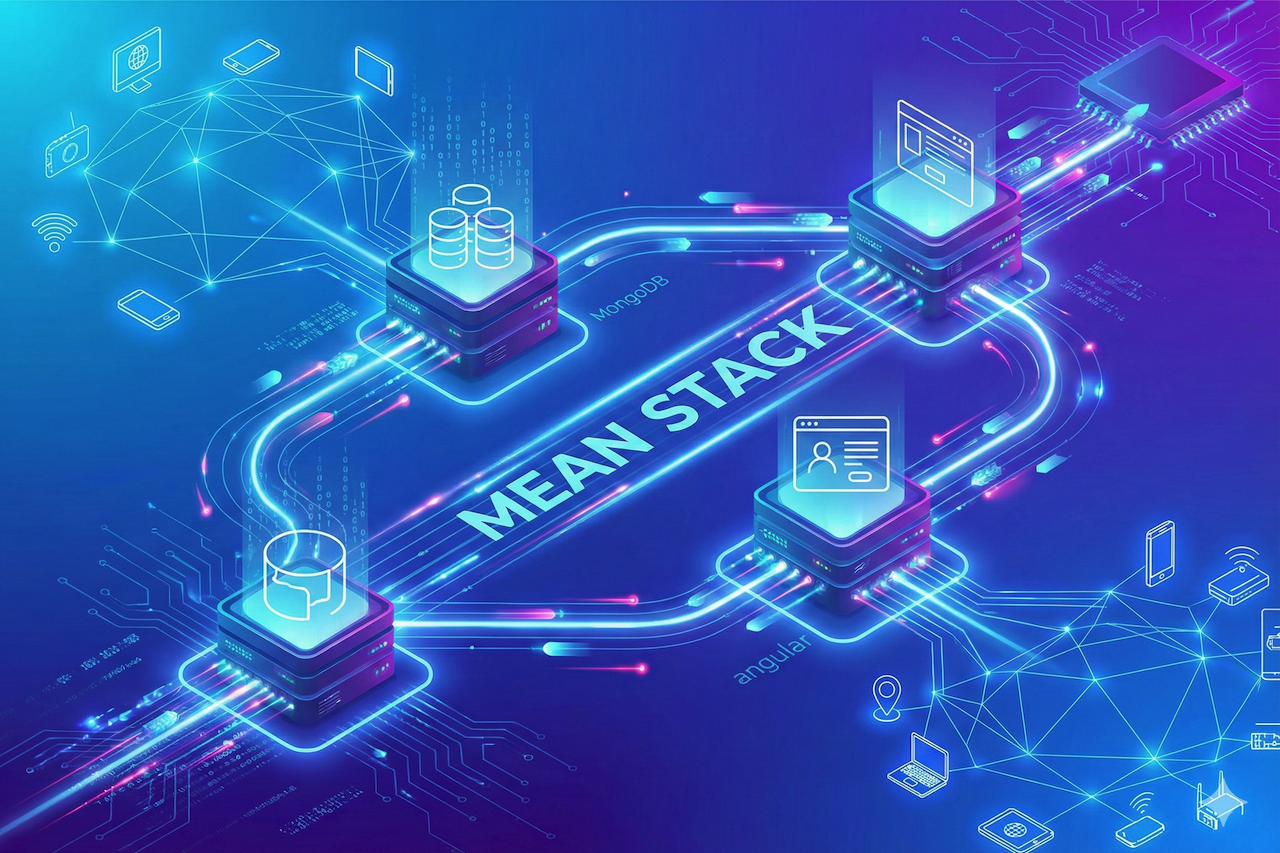
Featured Image generated by Google Gemini.
Share this post
Leave a comment
All comments are moderated. Spammy and bot submitted comments are deleted. Please submit the comments that are helpful to others, and we'll approve your comments. A comment that includes outbound link will only be approved if the content is relevant to the topic, and has some value to our readers.
Comments (0)
No comment