
Web applications serve as the primary technological foundation that many digital technologies depend on today. The architectural infrastructure behind SaaS platforms, online banking systems, and collaboration tools enables system performance and security while supporting scalability and long-term growth.
A web application functions through an arrangement of components that establish connections between different system elements. The architecture determines how users access the application, how the system processes data, and how it responds to user actions.
Developing modern web applications requires expertise in front-end development, back-end infrastructure, and cloud environments. Careful architectural planning is a key part of web app development, helping teams build scalable systems while avoiding common design errors.
This guide presents an overview of web application architecture, including its core components, architectural layers, and common design patterns used in modern web development.
What Is Web Application Architecture?
Web application architecture establishes the fundamental structure of a web system by detailing how its various components interact with one another.
The basic structure of web applications consists of three essential components:
- The client interface in the browser
- The server that processes requests
- The database that stores application data
When a user performs an action in the browser, the client sends a request to the server. The server processes the request by retrieving data from the database when necessary and then sends the response back to the browser.
A well-designed architecture allows the system to maintain reliable performance even under heavy user traffic.
Core Components of Web Application Architecture
Client Side (Frontend)
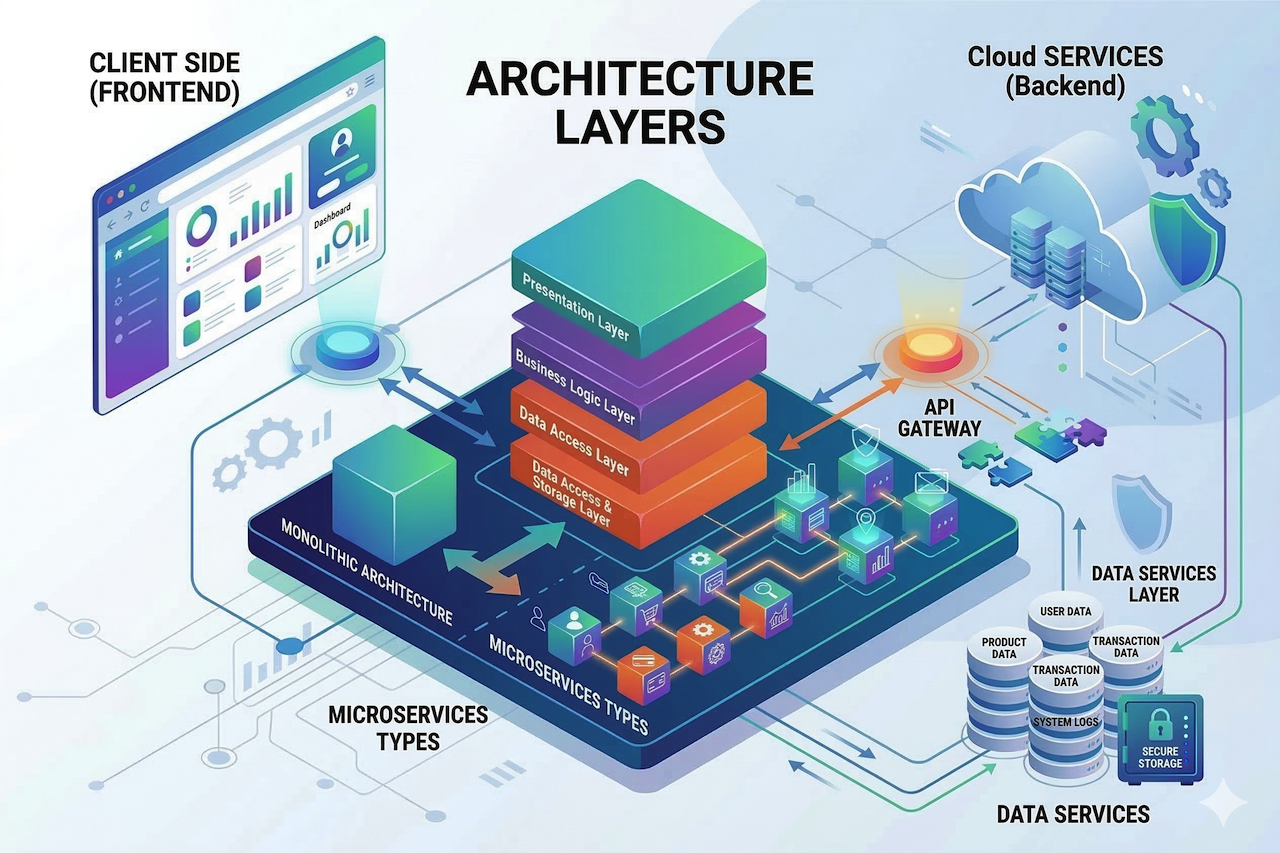
The client side represents the part of the application users interact with in their browser. This layer includes user interface elements, layout and design functions, user input handling, and API requests to backend services.
HTML, CSS, and JavaScript are the primary technologies used to build frontend applications. Developers often use frameworks such as React, Angular, and Vue to create interactive interfaces and manage complex UI logic.
The frontend communicates with the backend to deliver a seamless user experience.
Server Side (Backend)
The backend system handles application functionality and processes incoming user requests. It performs essential tasks such as request processing, authentication and authorization, business logic execution, and communication with external systems.
Backend applications are commonly built using technologies such as Node.js, Python, Java, or .NET. This layer forms the operational core of the web system.
Database Layer
The database stores the persistent data required for the application to operate. This can include user accounts, transactions, product catalogs, and system logs.
Two common types of databases are relational databases such as PostgreSQL and MySQL, and NoSQL databases such as MongoDB. The choice depends on scalability requirements and the structure of the stored data.
APIs
APIs allow different components of the system to communicate with each other. They enable the frontend to request data from the backend and allow applications to integrate with external services such as payment processors and analytics platforms.
REST and GraphQL are two widely used API design approaches. REST remains particularly popular because it is simple to implement and compatible with many development frameworks.
Layers of Web Application Architecture
Dividing a web application into logical layers helps simplify development and maintenance.

Presentation Layer (UI/UX)
The presentation layer manages interactions between users and the system. It collects user input and sends requests to the application layer for processing.
Business Logic Layer
This layer handles the core business logic of the system. It processes client requests, enforces application rules, and manages communication between services.
Data Access and Storage Layer
The data access and storage layer is responsible for data storage and retrieval. It manages database connections and ensures data integrity while supporting efficient system performance.
Separating these layers allows developers to update individual components without affecting the entire system.
Types of Web Application Architecture
Various architectural approaches are used to build modern web applications.
Monolithic Architecture
In a monolithic architecture, all application components operate as a single system.
This approach can simplify development and deployment for smaller projects. However, as the application grows, scaling and maintaining the system can become more complex.
Microservices Architecture
A microservices architecture divides the system into smaller, independent services.
Each service performs a specific function, such as authentication, payments, or notifications.
This approach improves scalability because individual services can be updated or scaled independently.
Serverless Architecture
Serverless architecture allows developers to run code without managing underlying infrastructure.
Cloud providers automatically scale resources based on demand, making this model useful for event-driven applications and systems that experience unpredictable traffic patterns.
Why Architecture Matters
Architecture plays a major role in determining an application’s performance, scalability, and long-term maintainability.
Well-designed systems can support growing user demand, integrate new features, and handle large workloads. Poor architectural decisions, however, can lead to performance issues, expensive redesigns, and difficult system maintenance.
By planning architecture early in the development process, teams can build web applications that remain stable and reliable as they evolve.
Conclusion
Web application architecture plays a critical role in how modern digital systems operate. From core components such as the frontend, backend, and database to architectural layers and design patterns like monolithic, microservices, and serverless models, each element contributes to the overall performance and scalability of a web application.
Understanding these architectural principles helps developers and organizations design systems that are reliable, maintainable, and capable of supporting future growth. By choosing the right architecture early in the development process, teams can build web applications that remain efficient, flexible, and ready to meet evolving user demands.
Featured Image generated by Google Gemini.
Share this post
Author

Read the latest articles from Yuliya Melnik
Why Cloud Optimization Is Critical for SaaS Growth

June 10, 2026
Cloud infrastructure powers nearly every modern SaaS product. It offers the flexibility to launch quickly, expand across regions, and deliver services without relying on physical hardware. However, simply deploying a SaaS platform in the cloud does not automatically guarantee efficiency.
Learn moreThe Difference Between MVP and First Product Version: A Founder’s Guide
June 10, 2026
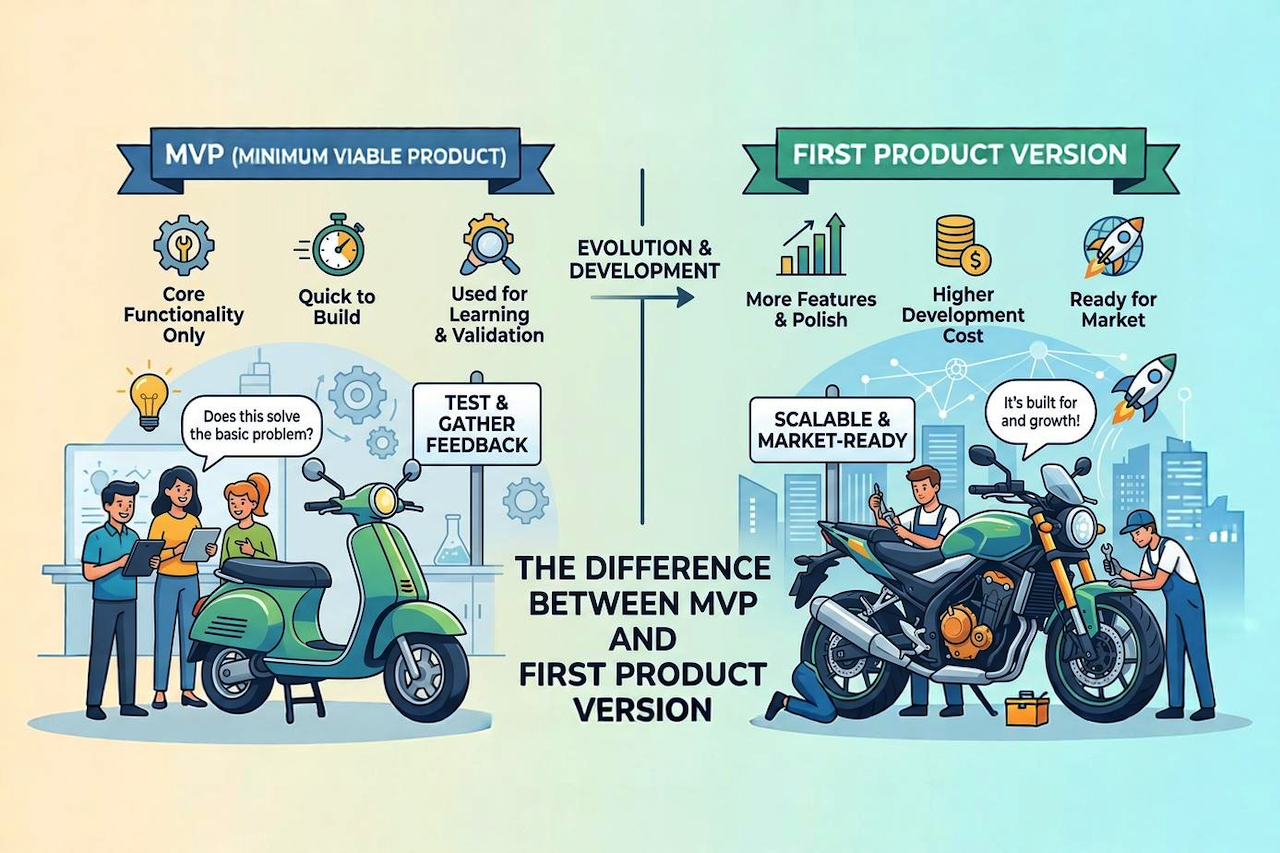
Many founders use the terms MVP and first product version almost interchangeably. But in reality, they represent two different stages of product development. An MVP (Minimum Viable Product) is used to validate a business idea with a small investment. The first product version follows that validation and o [...]
Learn moreLeave a comment
All comments are moderated. Spammy and bot submitted comments are deleted. Please submit the comments that are helpful to others, and we'll approve your comments. A comment that includes outbound link will only be approved if the content is relevant to the topic, and has some value to our readers.
Comments (0)
No comment