
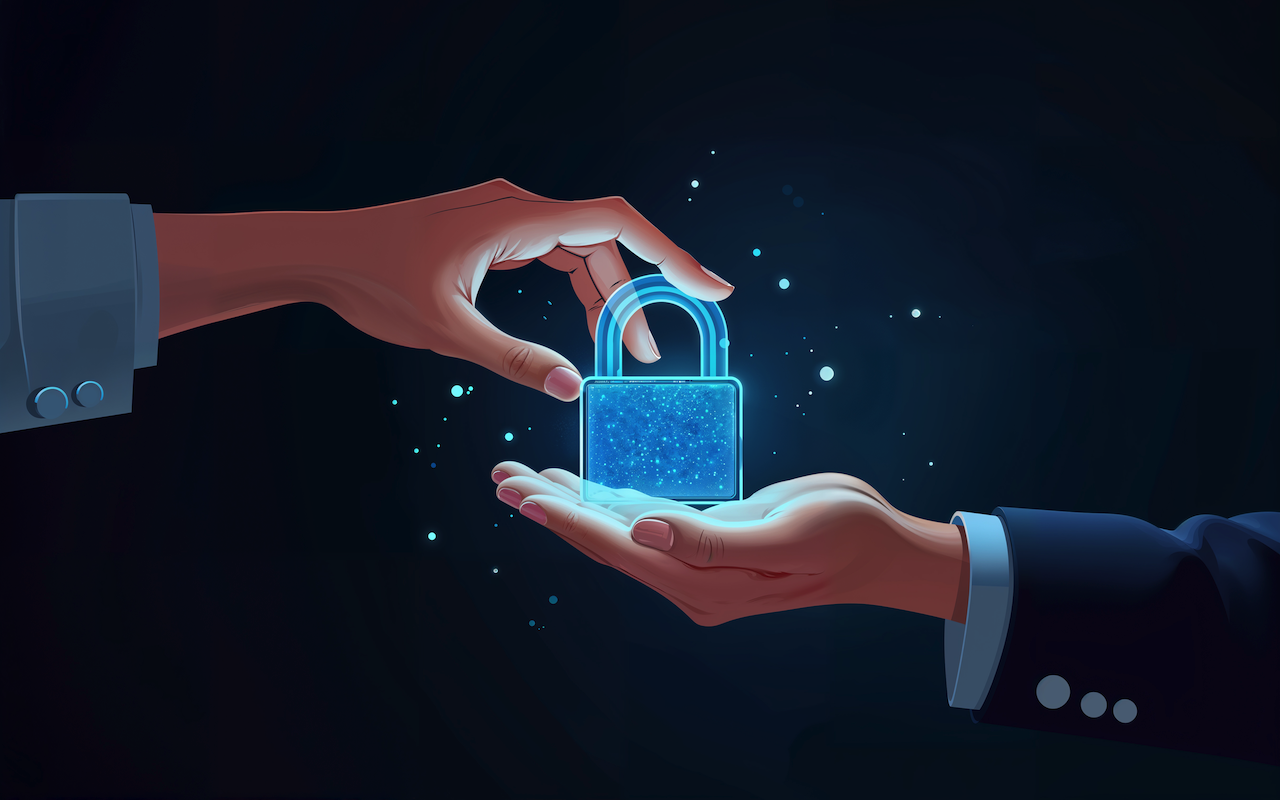
When you hear "cybersecurity," what comes to mind? You probably think of a technical chore. The complex items your IT team handles. The firewalls, strong passwords, and time-to-time warnings about hackers.
But what if that's the wrong way to look at it? What if it's the essence of building rock-solid brand trust? In today's market, everyone is fighting for the same customers. Whether you're a startup or a Fortune 500 company, you need an edge. That edge is trust.
Today's customers are smart. They see the news headlines about massive data breaches. Their biggest question is no longer just "Does this product work?" but rather "Can I trust this company with my personal information?"
In this article, we explore how proactive security practices strengthen trust, improve loyalty, and boost customer retention across industries.
Has Trust Become The New Bottom Line?
Think about the last time you bought something online. You probably submitted your name, phone number, email address, and credit card number. How did that feel?
If the website looked old, slow, or sketchy, you might have even abandoned your cart.
Now, think of a site that was clean, fast, and professional. The checkout process was smooth. You felt safe. That sense of security is the new currency of business.
Studies show that over 75% of US customers would stop buying from a company after it suffers a data breach. Many will leave and never come back.
In a competitive market, you might have a great product. But if your rival has a great product and makes customers feel safer, they will win. Every single time.
Key Cybersecurity Technologies That Build Visible Trust
A business cannot simply claim to be secure. Customers want to see evidence. Here are the core cybersecurity technologies and best practices that strengthen security and clearly demonstrate reliability.
1. Implement 24/7 Digital Safeguards
You can use smart systems called SIEMs (Security Information and Event Management) that use machine learning to monitor for anything unusual. They can be trained to spot anomalies (like a login from another country) or insider threats (an employee poking around where they shouldn't be).
These systems are great for tracking APTs (Advanced Persistent Threats), the super-sneaky hackers who try to stay hidden for months. For the more obvious attacks, you'll need an IDPS (Intrusion Detection and Prevention System) to block known malicious traffic.
2. Use Strict ID Checks
In the old days, if you were "inside" the network, you were trusted. Not anymore. You should adopt a Zero Trust srchitecture. The motto is literally "trust no one." Every single time someone tries to access anything, they have to prove who they are.
It works with IAM (Identity and Access Management), which enforces RBAC (Role-Based Access Control). It means you only give people the keys for the specific tasks they absolutely need.
You can also add the extra security layers, such as:
- MFA (Multi-Factor Authentication): This is their password plus a code from their phone.
- SSO (Single Sign-On): This lets your users log in once to all their apps securely.
3. Deploy Strong Data Encryption
You need to lock the data in a digital safe using encryption. You can use AES-256 to scramble it when it's just sitting on a server ("at rest") and TLS 1.3 to scramble it while it's moving across the internet ("in transit"). If a hacker manages to steal it, all they'll get is unreadable junk.
You can also run automated backups using tools like Veeam and create immutable backups. These are special, write-once copies of your data. It means the data cannot be modified or deleted, even if any ransomware attacks occur.
4. Continuous Testing and Monitoring
How will you know if all this stuff actually works? You can do this through regular testing. It should include:
- Penetration Testing: You can use tools like Nessus to find weaknesses before cybercriminals do.
- IRP (Incident Response Plan): You must have a step-by-step playbook, often based on the NIST Cybersecurity Framework, outlining exactly what to do the moment a breach occurs so you can contain the damage, eradicate the threat, and recover quickly.
5. Get Cybersecurity Certified
You can pay independent auditors or cybersecurity consulting services to come in and check everything to get you certified for standards like ISO 27001 or SOC 2. It's not just you saying you're secure; it's a trusted expert verifying it.
You can even conduct Red Team/Blue Team exercises. It’s real-time stimulation where one team (Red) tries to hack you, and your team (Blue) has to find and stop them. It's the best way to keep your defenses sharp.
Conclusion
To conclude, security shouldn’t be something your business keeps in the background—communicate it clearly. Consider adding a dedicated “Security” or “Trust” page on your website to explain, in simple terms, how you safeguard user data. A customer who feels uncertain about their personal information is already halfway out the door. But a customer who feels protected and confident in your practices is far more likely to stay, trust your brand, and remain loyal for the long term.
Featured Image by Freepik.
Share this post
Author

Read the latest articles from Aliona Miller
How Chatbots Are Enhancing Customer Experience in Mobile Apps?

March 24, 2026
The banking sector has undergone a drastic revolution in the present day, driven by AI and automation. Gone are the days when users had to wait in long queues to get their financial tasks up-to-date, and personnel were handling all this pressure on their own. Today, modern banking systems address various critical [...]
Learn moreChatbot App vs Live Chat vs AI Assistants: A Business Comparison Guide

January 28, 2026
Modern users communicate with brands through AI tools, which have become a common trend. As a result of this shift, customer communication has evolved from a ticket-based, wait-heavy process to fast, AI-driven engagement across various digital channels. This has undoubtedly enabled businesses to deliver b [...]
Learn moreLeave a comment
All comments are moderated. Spammy and bot submitted comments are deleted. Please submit the comments that are helpful to others, and we'll approve your comments. A comment that includes outbound link will only be approved if the content is relevant to the topic, and has some value to our readers.
Comments (0)
No comment